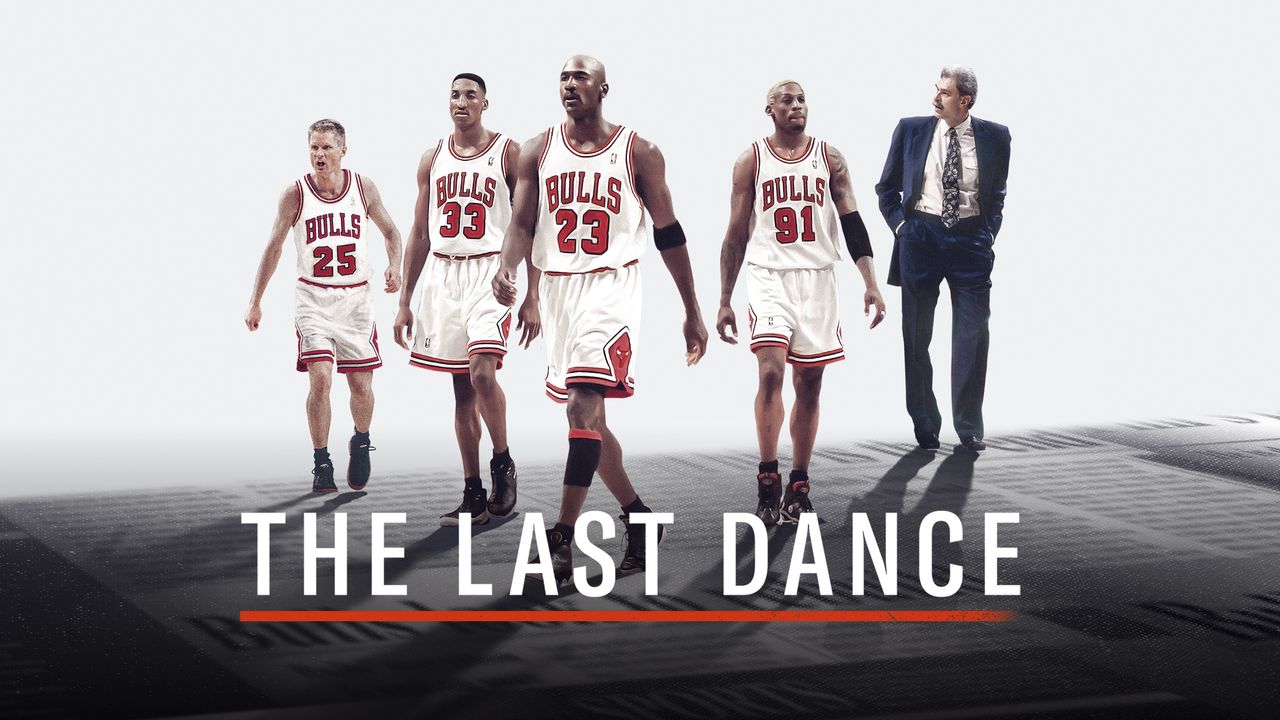
Episodes three and four of The Last Dance focussed heavily on the duo of Dennis Rodman, the dominant rebounder who was the defensive force behind Chicago’s second threepeat and a former member of the Bulls’ most bitter rivals at the time, the 1989 and 1990 “Bad Boy” Detroit Pistons and the head coach of the Bulls that arguably brought the team its order and structure that it needed to succeed, Phil Jackson.
#1. Dennis’ duties
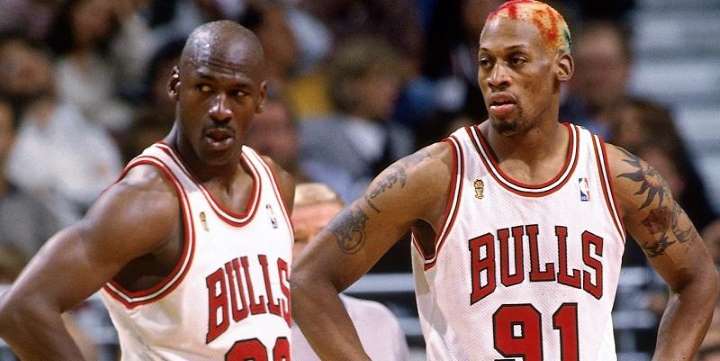
Episode three begins where episode two left off, with the Bulls struggling to string together wins with an absent Scottie Pippen, a helpless Michael Jordan and Dennis Rodman’s notorious attitude and eccentricity.
This is until as Jordan recounts, ‘Around that time, we had a game, and he (Rodman) gets kicked out for some s***.’ Jordan continues by saying that later that night, ‘I hear someone knocking on my door at the hotel. Now, Dennis never came to my room, but he comes and says, Man, you got an extra cigar?’ While this might seem innocuous at first, both Jordan and Rodman in their respective pieces to camera acknowledged that although there was no explicit apology, ‘it was his way of saying, look, I f***** up.’
Jordan concludes the story by saying that after that interaction between the two, ‘Dennis was straight as an arrow’.
Phil Jackson also emphasises how instrumental Rodman was during the Bulls’ resurgence in December of 1997 by saying ‘Dennis is what kept us together while Scottie was out’.
#2. The unsung HC
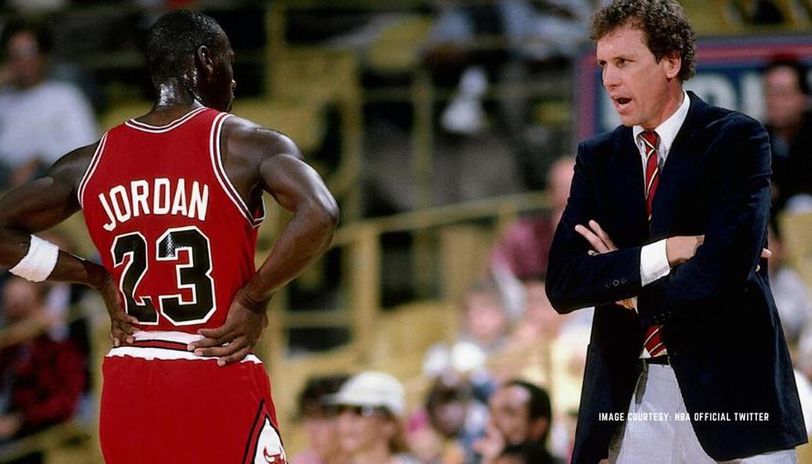
The documentary then shifts focus to the last head coach of the Bulls before Phil Jackson, Doug Collins. MJ speaks to the camera about Collins in high regard, saying that ‘Dougie was a breath of fresh air. He believed in everything I believed in, he wanted to win’.
The documentary largely attributes Jordan’s growth from a great player to a bona fide superstar to Collins and his trust in Michael to run the offence through him in every single game and how he pushed him in practices.
Jordan tells a story of how in multiple practices, Collins would put MJ in scrimmage games with the starting five against the subs, and in the middle of the game, when Jordan and the starters were winning, Collins would switch Jordan onto the second team.
Collins corroborates this, telling another story of how, ‘One day at practice, he got upset. He thought I was cheating with the score. He got upset and left practice, came back the next day and they were asking, you talked to Michael since practice yesterday? Then Michael came out, I grabbed him, kissed him on the cheek and said, I love him, he loves me’.
#3. “Jordan Rules”
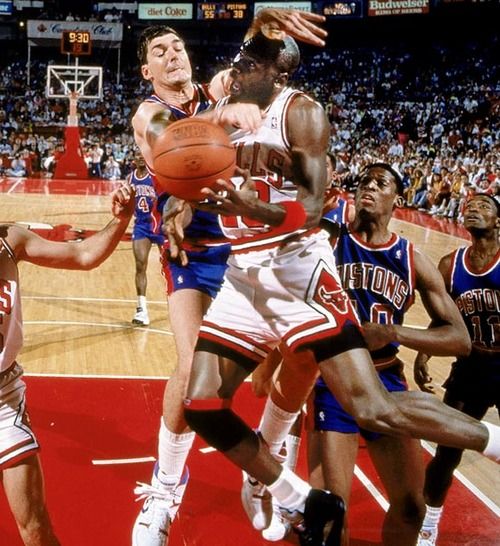
While the Bulls were on the come up in 1989, there were no doubts that one of the premier team in the Eastern Conference was the hard-hitting Detroit Pistons, so when the two teams met in the 1989 Eastern Conference finals, the Pistons were desperate to stop Michael Jordan from rallying the Bulls to victory, especially after falling to a 2-1 deficit in the series.
From that point, the Pistons adopted the infamous ‘Jordan Rules’, designed specifically to try to take Jordan out of the game. Detroit’s star point guard at the time Isiah Thomas recounts, ‘When he was in the air, we had no shot’, which in the series, equated to the Pistons intentionally fouling and checking Jordan before he could even attempt to attack the basket.
Brendan Malone, assistant coach for the Pistons between 1988 and 1995 elaborated more on what the ‘Jordan Rules’ entailed, mainly, don’t let Jordan attack the baseline, push him to the elbow, keep pushing Jordan onto dribbling with his left hand and trap him every time he tries to go into the low post. The interviewer then asked, ‘What happens when he does make it to the baseline?’ to which Malone responds, ‘That’s when (Bill) Laimbeer and (Rick) Mahorn would go up and knock him down to the ground’.
While the rough tactics did not win the Pistons any fans, it won them plenty of games, as they would go on to eliminate the Bulls in both the 1989 and 1990 playoffs and win the NBA championship in both of those seasons.
#4. Rodman’s rough ‘93
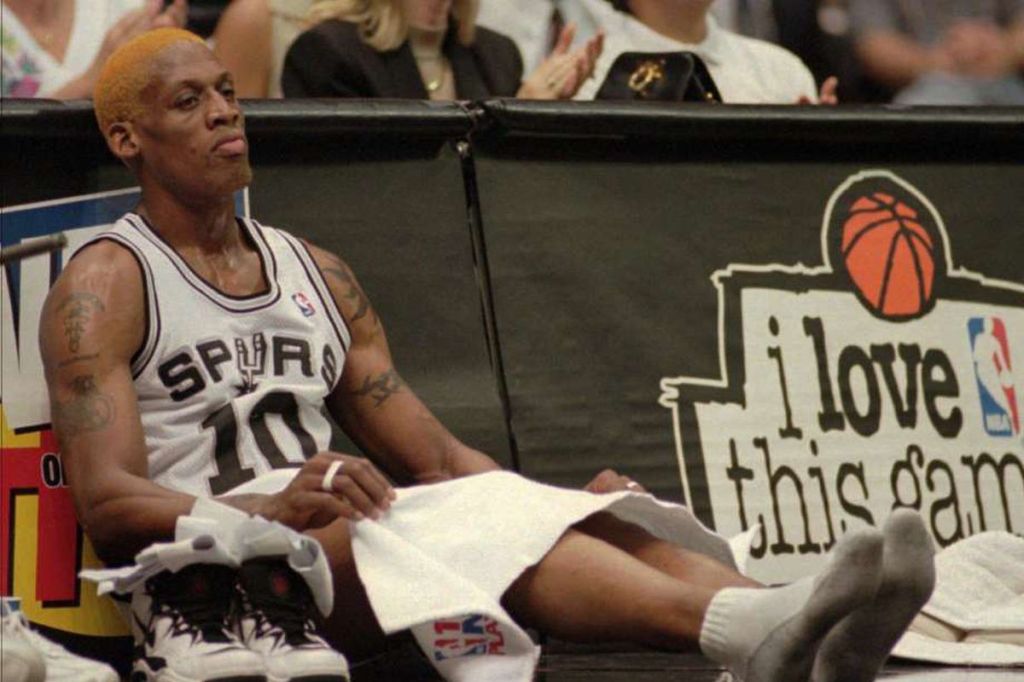
Focus then shifts to the troubling situation surrounding Dennis Rodman in 1993, still on the Pistons, but in the midst of the team’s swift decline from NBA finals contention. A reference is made to the news story where police, after being called by a friend worried about Rodman’s whereabouts, located Dennis, sat in his car outside the Pistons’ home stadium early in the morning, asleep with a gun in his hand, with his mood described as ‘despondent’. Rodman describing the period of time in his life as ‘a lost place’.
Rodman was then traded to the San Antonio Spurs in October of the same year, where a lot of the eccentricity that he is known for today began to surface. John Salley, a Pistons forward that played with Rodman, attributes a lot of Rodman’s more outlandish looks and his personality to his brief relationship with controversial popstar Madonna. Salley says that Madonna told Rodman ‘Don’t be who they tell you you should be’.
#5. Reigning in ‘The Worm’
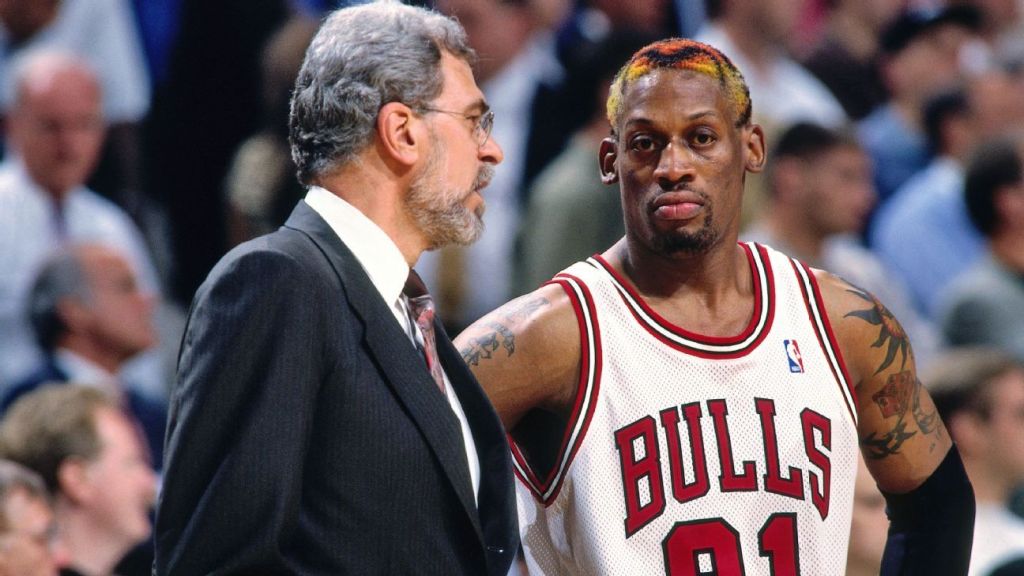
An interview is then shown from 2003 where then-Bulls GM Jerry Krause expressed that he had no interest in signing Rodman, until he was convinced by assistant GM Jim Stack that with Jordan and Pippen on the court, and Jackson as the head coach, the Bulls had the perfect structure to handle Rodman and get the best out of him.
Jackson described his first meeting with Rodman as ‘awful’ and there were worries that with Rodman’s history with the Pistons, who were still hated in Chicago, that the fans wouldn’t accept him. This was until Jordan and Pippen vouched for Rodman’s ability to help the team win, and when Pippen was asked by the interviewer how Rodman fit into the team initially, he responded with a smile, ‘like a hand in a glove’.
#6. 48 hours
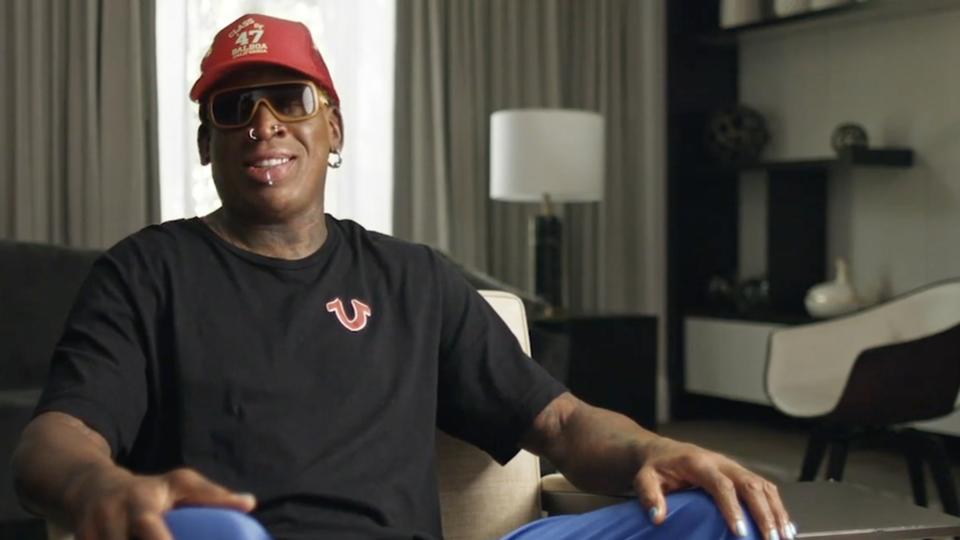
With the Bulls back to winning ways in January of 1998 and at the top of the Eastern Conference, the media frenzy around the Bulls’ struggles turn into a frenzy of speculation surrounding Michael Jordan’s future with the team, especially after Krause and Jordan’s opposing opinions on head coach Phil Jackson. The potential cracks in the team seemingly got worse when Pippen finally agreed to return to the team after a standoff with Bulls management over his contract.
This was due to the fact that Pippen was of course Jordan’s right-hand man and Rodman had gotten used to being in that trusted position while Pippen was out, Rodman himself saying ‘I was basically the third wheel of the family’.
Jordan then tells a story about how Rodman coped with Scottie’s return, how Rodman ‘needed a vacation’, something that Jordan was not happy with as he told Jackson, ‘Phil, you let this dude go to vacation, we’re not going to see him’. Rodman and Jackson then agreed on a vacation for Dennis in Las Vegas, giving him a time limit of 48 hours to return to the team.
When asked if Dennis returned on time, Jordan responded, ‘We had to go get his a** out of bed’.
#7. The tribe
Early in episode four it is established just how important of a presence Phil Jackson was to Dennis Rodman, as Rodman says of Jackson, ‘He don’t look at me as a basketball player, he look at me as a great friend. He realised that I probably needed him for inspiration, he wants to see me persevere’.
This bond between the two men is strengthen by Jackson’s recollection of a meeting the two men had where Rodman noted the large amount of Native American artifacts and items around his office and expressed his own interest in the subject. Jackson recalls telling Rodman ‘Dennis, in their tradition and the tradition that I knew, you would be a heyoka, a backward-walking person. They were people that were different and you’re a heyoka. You’re the heyoka in this tribe.’
Jackson attributes this interest in Native American culture to the fact that his grandparents had a boarding house where Native American people from a nearby Indian reservation would have their kids.
#8 The man in the middle
Phil Jackson’s path to becoming the iconic mind behind the Bulls dynasty was an interesting one to say the least, Jackson started off as a player, being drafted by the New York Knicks, where he would spend 11 years and win two championships, playing a role that was similar to the one he would help Dennis Rodman fill in Chicago. Ironically, Jackson was also known as a free spirit and a figure that went against any corporate sensibilities the league had, highlighted by the documentary referencing his book, ‘Maverick’ in which Jackson describes his experiences with acid.
Jackson would make a name for himself coaching in Puerto Rico, in a city called Quebradillas. Jackson describes the volatile nature of the fans in the area, telling a story of how the city’s mayor had shot an official in the leg in response to a bad call and his only punishment was to be banned from the team’s home games for the rest of the season.
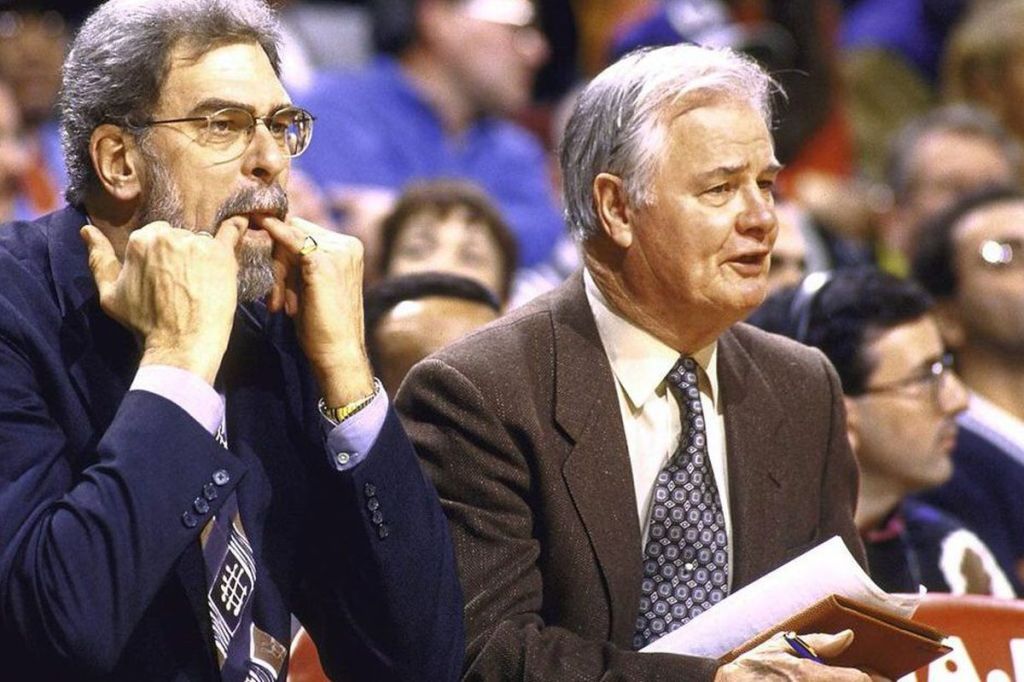
Jackson would then jump to the CBA where he won a championship with the Albany Patroons before being brought in as the assistant head coach to then-Bulls HC Doug Collins.
Another assistant coach under Collins was Tex Winter, who innovated the ‘triangle offence’ that Jackson would learn from him and then popularise with the Bulls. The tensions in the front office rose when Collins would not listen to Winter’s calls to implement the ‘triangle’ into Chicago’s game plans as Collins was focussed on having Michael Jordan run the team, while the ‘triangle’ was a more team oriented system.
When Collins was eventually fired and Jackson was promoted to head coach, initially Jordan was not a fan of the decision as he saw Jackson as ‘trying to take the ball out of my hands’. However, Jordan saw that the methods would give the team the best chance of success and Jackson was right as the decision allowed Scottie Pippen to flourish.
#9. Motor City meltdown
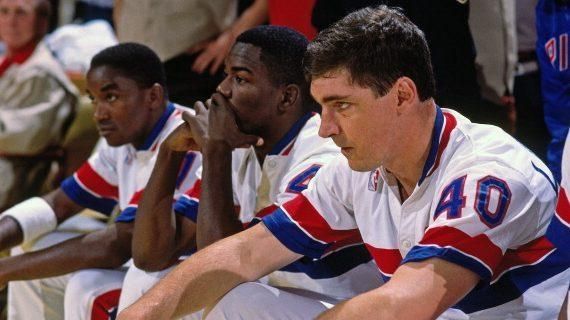
After losing in the Eastern Conference finals for the second consecutive year to the Detroit Pistons, this time taking the series to a decisive game 7, the Bulls were motivated to get past their arch-rivals. The Bulls, especially Jordan, began weight training to try to outmuscle the Pistons and to be stronger attacking the basket.
In addition, Jordan tried to instil the mental belief in his teammates that they could beat the Pistons if they were unaffected by their rough play. Former Bulls forward Horace Grant relented that, ‘They knew, as soon as we started complaining, they had us.’
A pivotal moment in the best-of-7 series between the two teams in the 1991 Eastern Conference finals took place in game four when after an attempted layup, Rodman, then playing for the Pistons, shoved Scottie Pippen hard to the ground. John Salley recounts seeing the mental difference between Chicago from the two years prior to then, saying after the fall, ‘Scottie was unshakeable, didn’t even want a Band-Aid. When we saw that, it was over’.
The Bulls would sweep the Pistons in that series, winning four games to zero and in the aforementioned series-clinching game four, Detroit players began leaving the bench and going to the locker room before the game was even over, refusing to shake hands with the Bulls.
It was clear that there was still some animosity there as when Jordan was played Isiah Thomas’ piece to camera about the walk-off, Jordan scoffed, pointed out how the Bulls shook the Pistons hands in the previous two series losses for the Bulls and how they expected the same courtesy.
#10. The first ring
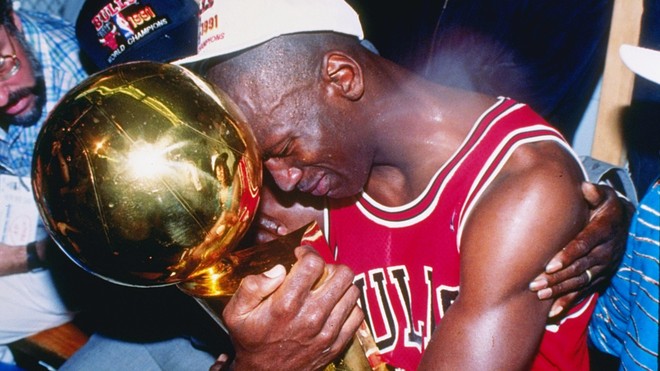
The 1991 NBA finals was the first finals appearance in Chicago Bulls history, let alone in the Jordan era of Bulls basketball, and Chicago was met with a tough task, taking down Magic Johnson and the Los Angeles Lakers. Johnson and the Lakers spent the majority of the 80s engaged in an incredible rivalry with Larry Bird and the Boston Celtics. At this point in his career, Jordan was seen as the successor to Bird and Magic but to many, he had not proven that he could win when it mattered yet.
The notion at the time was what separated Bird and Magic from Jordan was that Jordan won individual scoring titles, while Bird and Magic won NBA championships, which Jordan said ‘ate at’ him.
The series between the Bulls and Lakers was almost a perfect display of the culture that Phil Jackson had built into the Bulls and would go on to keep as the Bulls dominated the 90s, as while Jordan proved that he could win on the highest stage, this matchup was just as much about his teammates as it was about him as Scottie Pippen gained plaudits by many for shouldering the responsibility of defending Magic Johnson throughout the series and excelling in that role and in game five, with both teams tied 80-80 going into the fourth quarter, Jordan would repeatedly pass up opportunities for himself to pass the ball to John Paxson, who found himself consistently open in the fourth due to the Lakers’ defensive focus on Jordan.
The Bulls would defeat the Lakers in the series 4-1 and claim their first championship for what would go on to be remembered as one of the league’s greatest ever dynasties.
 The Inbound Observer