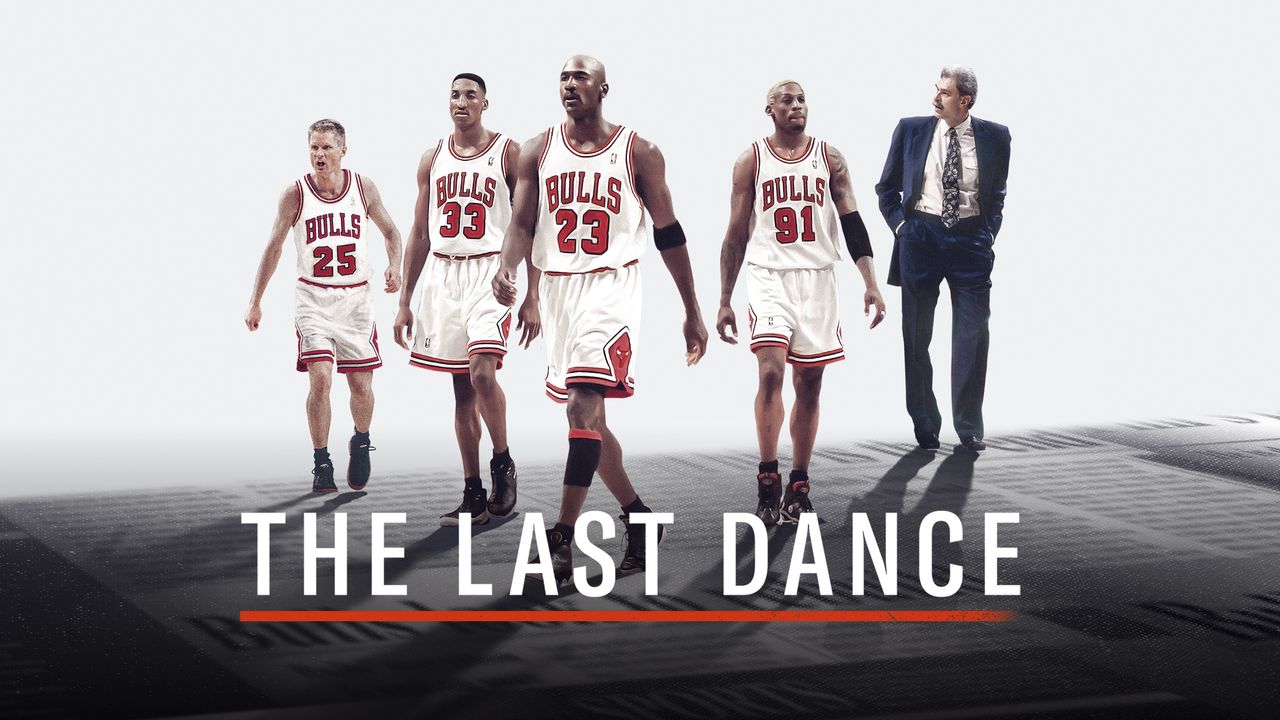
Going into the 1997/98 season, the Chicago Bulls had won five championships in seven years, with many of their stars aging or coming to the last years of their contracts, the management of the Bulls were put in a difficult situation when deciding whether or not they would push for a sixth championship or dismantle the team for future assets.
The Last Dance is a miniseries airing on Netflix and ESPN detailing the inner turmoil of the Bulls 97/98 season and features accounts from a star-studded cast of players from that era of Bulls basketball, Bulls executives, NBA journalists and NBA legends recounting games against the Bulls from that time period.
#1. The spanner in the works
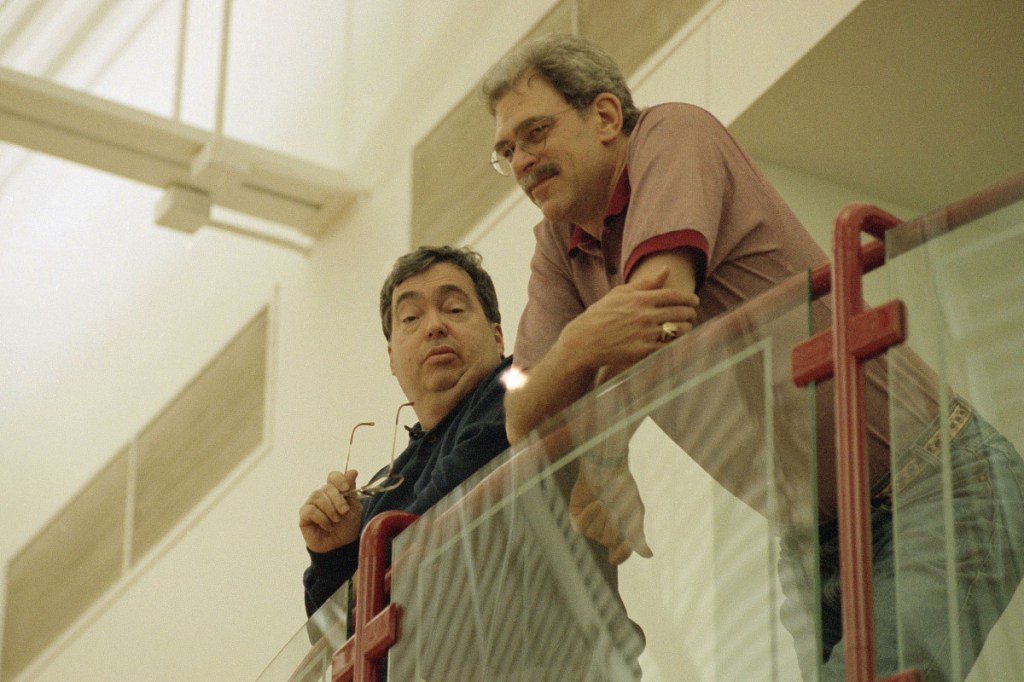
Even before the 97/98 season tipped off, the Bulls almost seemed poised to collapse, the owner of the Bulls, Jerry Reinsdorf, recounts the financial disputes that took place between then-General Manager Jerry Krause and Head Coach Phil Jackson. Jackson wanted to be compensated for the success that he had brought to the Bulls franchise and Krause reportedly did not see that as an option and saw Jackson as expendable.
Jackson summed up the situation between himself and Krause saying that there was ‘no chance for reconciliation.’ The situation was resolved when Reinsdorf met with Jackson and agreed to a one-year deal for Jackson to return and coach the team.
#2. The Last Dance
While it may have appeared that Reinsdorf had settled the issues as owner of the team, it was clear that Krause’s intentions remained the same, in an interview that aired shortly after the announcement of Jackson’s one-year deal, Krause explicitly said, ‘This will be Phil’s last year as the coach of the Bulls’.
In addition to the public statement, Jackson also recounts being called into Krause’s office where he was told ‘I don’t care if you win all 82 games this year, this is going to be your last year here’, Jackson also says that they were the only words exchanged between the two men in the aftermath of the announcement.
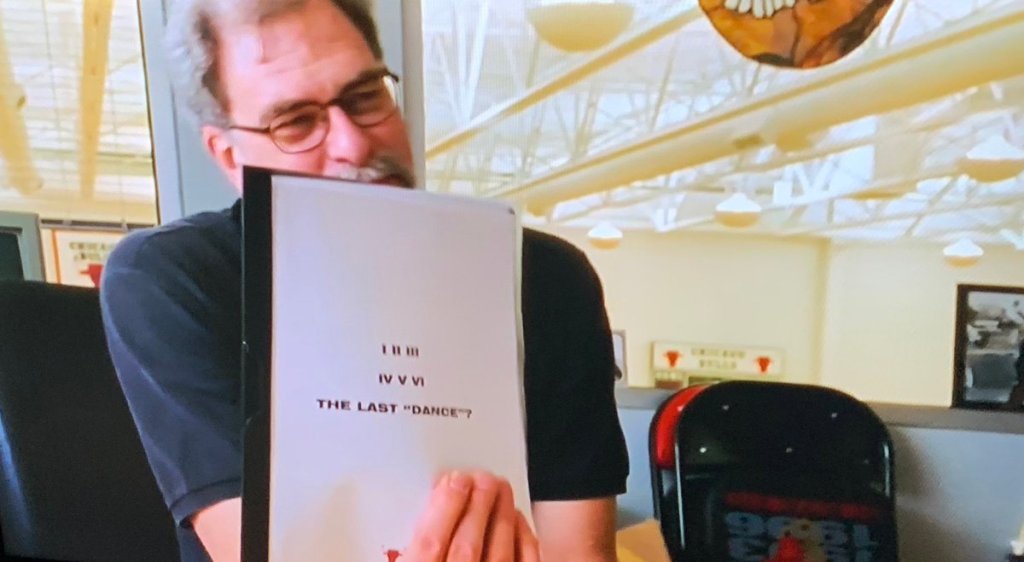
In light of the issues between Jackson and Krause, Steve Kerr, who played for the Bulls from 1993 to 1998 recalls that ‘Phil always looked for a theme every season’, and laminated on the team handbook for the first official meeting prior to the season, Jackson’s theme was simple, he called it The Last Dance.
#3. MJ’s drive
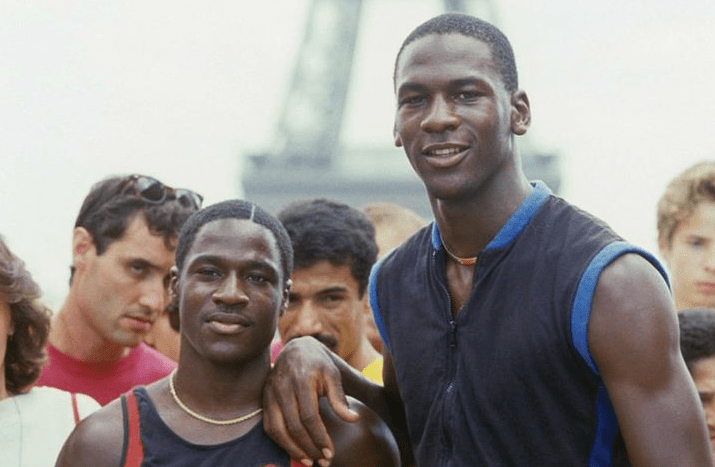
The documentary then flashes back to Michael Jordan’s collegiate career with the University of North Carolina, detailing Jordan’s work ethic and his motivation to be the best. In particular, legendary Los Angeles Lakers forward and UNC alumnus James Worthy tells a story of Jordan pushing a tired Worthy back onto the court for a one-on-one game to test himself.
Worthy jokes ‘I was better than he was, for about two weeks!’
Jordan’s motivation is revisited again in episode two but it instead focusses specifically on his relationship with his family and his father, Michael tells stories about him competing for his father’s approval with his brother Larry and how that sibling rivalry pushed him to be the competitor he became.
In addition, Jordan relents that growing up in Wilmington, North Carolina came with racial tensions, and that also drove him to where Jordan recalls thinking as a child, ‘this is where I don’t want to be, I want to excel outside of this’.
The segment ends with the famous story of Michael being cut from his varsity high school basketball team and after a conversation with his mother, Deloris, she recounts telling her son to work hard over the summer and recounts that ‘that basketball never left his hand’.
#4. The culture before Jordan
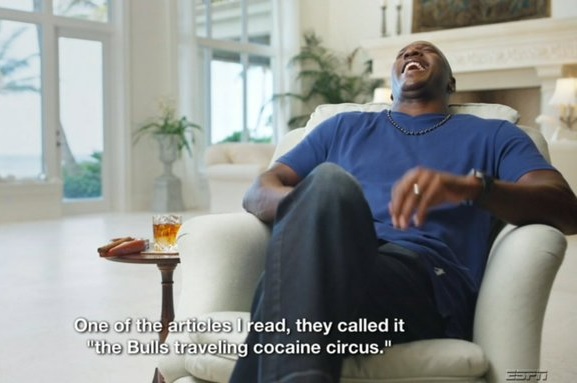
The focus then shifts to the state of the Bulls prior to the selection of Jordan in the 1984 NBA Draft, the Bulls were a mediocre team and Brian McIntyre, the Bulls director of marketing says that at the time, the team were unloved in their own city, comparing the level of Chicagoan interest in the Bulls to their franchises in other sports like the NFL’s Bears, the MLB’s Cubs and White Sox and the NHL’s Blackhawks.
Another factor in the lack of success in the Bulls was also the speculation of recreational drug use. The interviewer behind the camera references an article at the time which called the franchise ‘The Bulls’ travelling cocaine circus’, to which Michael tells a story from the preseason prior to his rookie year.
‘Guys were doing things that I didn’t see. I think we were in Peoria. It was in a hotel and I’m trying to find my teammates so I knock on a door and I hear someone say, “Shh, someone’s outside”, then I hear this deep voice say, “Who is it?”, I say “MJ”, and then they all say “F*** it, he’s just a rookie, don’t worry about it”. So, they open the door, I walk in and practically the whole team’s in there, you’ve got your lines over here, you’ve got your weed smokers over here and you’ve got your women over here.’
Jordan compares this to the ‘clean program’ he was part of in college and when he describes his unwillingness to get involved with everything his teammates were doing, he said ‘I was more or less on my own’.
#5. A new face
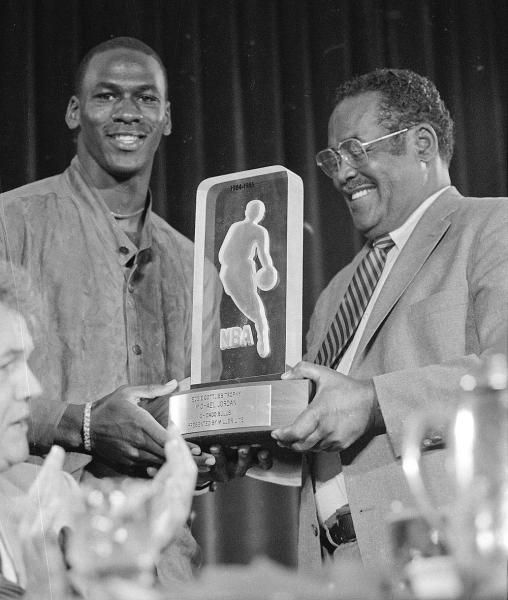
Moving onto his rookie year, MJ highlights his third game, against the rival Milwaukee Bucks as the game where he ‘earned his stripes’.
Milwaukee had a formidable defensive team and boasted a star in Sidney Moncrief who was the then-reigning NBA Defensive Player of the Year. Jordan tells the story of the Bulls trailing 85-76 going into the fourth quarter and how some players would just give up and say that they’ll move onto the next game to which Jordan’s belief was that the game wasn’t over yet. Jordan would rally the Bulls to a 110-116 victory at the end of the fourth.
Several NBA legends then describe the way in which Jordan exploded onto the scene in his rookie year and reinvigorated the Bulls franchise, capped off with former US President and Bulls fan Barack Obama recalling, ‘When Michael first came to town, I didn’t have the money to buy tickets for a Bulls game, even the discount ones, back in the day. I was pretty broke. But suddenly, you have a sports figure that put Chicago on the map, and that everybody was able to rally around’.
#6. Scottie’s struggles
Episode two begins with a focus on the childhood of Jordan’s right-hand man in Chicago, Scottie Pippen. Pippen recounts growing up in a town of only around 3,500 people in Hamburg, Arkansas, being one of 12 siblings.
Pippen tells the traumatic memories of his childhood, notably being ’11 or 12’ and watching his father suffer a stroke while he was eating his dinner, a stroke that would leave Scottie’s father without the ability to speak and in a wheelchair and bedridden for the rest of his life.
Scottie continues by telling another story about how six years before his father’s stroke, his second oldest brother was left paralysed after an accident in PE class in high school.
Pippen describes basketball almost like an escape for him saying that, ‘Basketball gave me an opportunity just to get out of the house and play, didn’t even need anyone to play with’.
#7. The growth of a legend
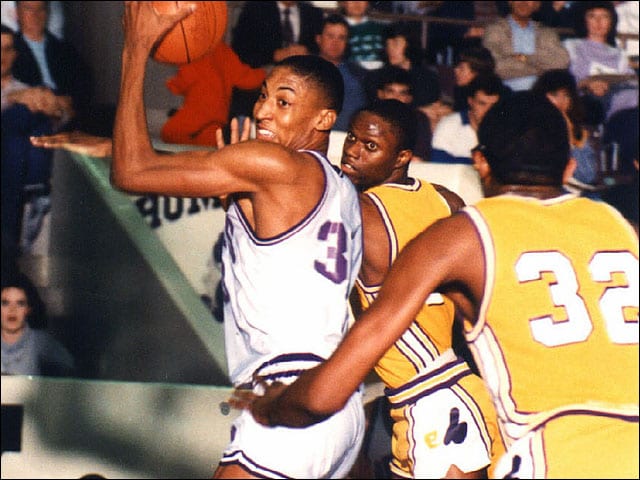
The focus moves on to telling the story of Scottie’s journey to the NBA from the University of Central Arkansas, describing how Scottie arrived and was made the team’s equipment manager and was only given an athletic scholarship after other teammates fell off academically. Pippen recalls how he always played as a guard, being 6”1 and only 155 pounds, but in the summer between his freshman and sophomore years, he started lifting weights and grew five inches.
Pippen still had the technique and elusiveness of a guard but now had the size and physicality to dunk and rebound at a high level. This skillset caught the attention of NBA scouts and Scottie was eventually taken with the fifth pick in the 1987 NBA Draft by the Seattle SuperSonics before being traded on the same night to the Bulls.
#8. Pippen’s pay
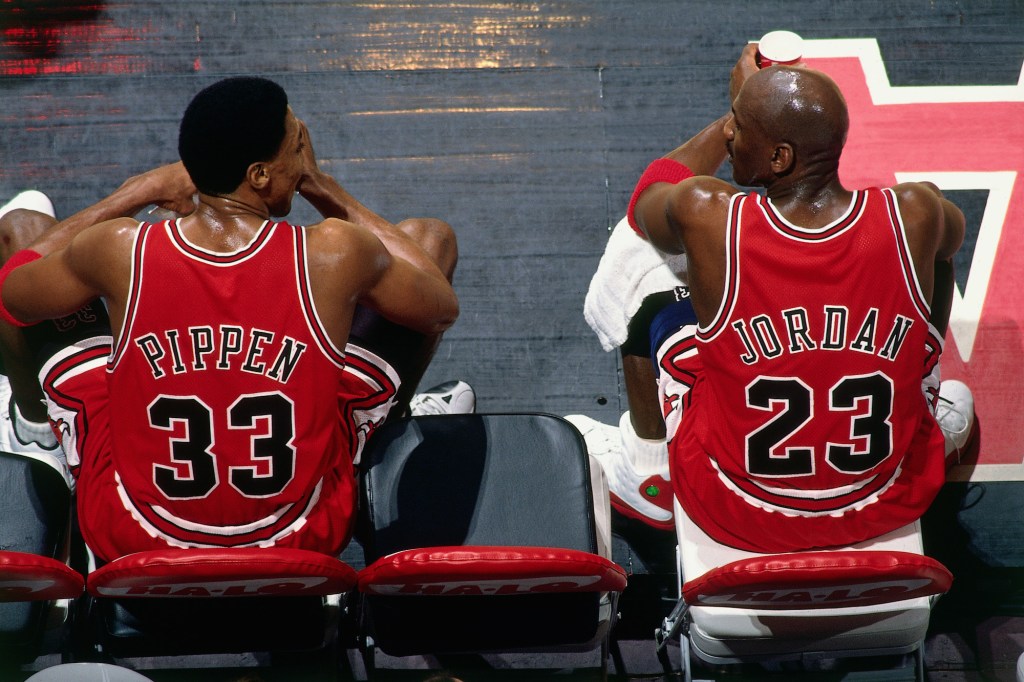
Despite his clearly apparent value to the team and his status as one of the best players in the sport, Scottie Pippen would go into the 1997/98 season as only the sixth highest player on the Bulls and the 122nd highest paid player in the NBA.
This was mostly down to Pippen signing a contract in 1991 for 7 years and only $18 million. A contract that even Jerry Reinsdorf believed was ‘longer than I thought was smart for him’. Pippen saw the situation differently however, saying at the time ‘I couldn’t afford to gamble getting injured and not being able to provide. I needed to make sure the people in my corner were taken care of.’
This created issues when Pippen saw the money that he could be making had he not been so conservative early in his career and wanted to restructure his contract, something Reinsdorf had a strict belief against.
The 1997/98 season was the last season of that contract for Pippen and it seemed his frustrations were at a fever pitch. Pippen recalls deliberately receiving surgery on a nagging injury late in the offseason because, ‘I’m not gonna f*** my summer up trying to rehab for a season if they’re not going to look forward to having me’.
This move caused Pippen to miss the beginning of the 97/98 season, where amongst all the animosity, the Bulls began with zero wins from their first four games.
This caused issues for Michael Jordan, who was left frustrated with the losses due to the lack of help and effort from his teammates, which caused Jordan to lash out and berate them during practices.
#9. Seven minutes
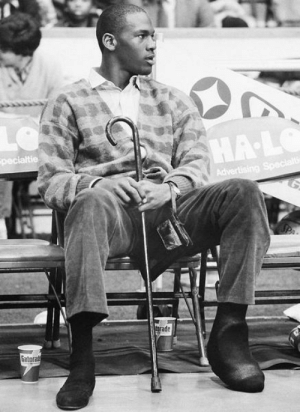
The documentary then flashes back to MJ’s second season in the NBA, after being named Rookie of the Year in his debut season. Jordan recounts the third game of the season against the Golden State Warriors, a game in which Jordan broke his left foot trying to receive a pass. Jordan had never previously missed a game, even before the NBA, he would miss 64 that season.
Jordan would convince the Bulls to let him go back to UNC to recover, where he played in one-on-one games and eventually full five-on-five scrimmages without the Bulls’ knowledge.
Despite this, the Bulls would not allow Michael to return to play as they were not in a position to make the playoffs, which if they failed, would grant them a higher pick in the upcoming draft and the risk for Jordan to aggravate his injury was low but could end his career if it did indeed worsen.
This angered Jordan as it showed ‘a losing attitude’. As a compromise, management allowed Jordan to return but on a restriction that he would only be allowed to play seven minutes per half. Despite the restriction, Michael would rally the Bulls to a winning streak that put them in reach of finishing in a playoff spot.
Jordan recalls a pivotal game against the Indiana Pacers in the Bulls’ quest for a playoff spot, where they were down by one with 30 seconds to go. Jordan begged then-Head Coach Stan Albeck to let him into the game, but management had vowed to fire Albeck ‘on the spot’ if he played Jordan over his restriction.
John Paxton fortunately made a game winning shot to lead Chicago to victory but after the game, Albeck locked Jerry Krause out of the team locker room in response to the threats made by management.
#10. ‘God disguised as Michael Jordan’
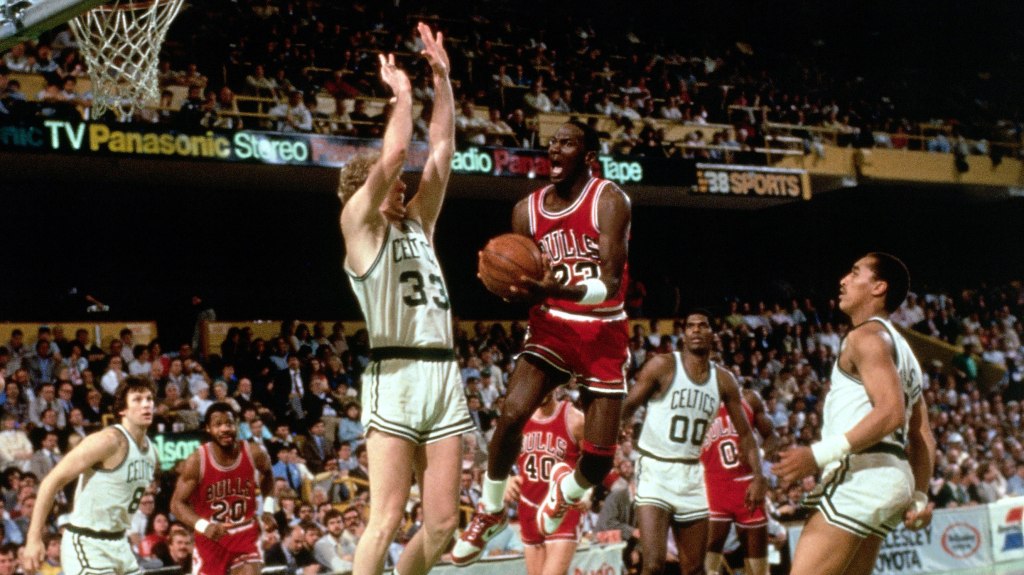
Jordan would will the Chicago Bulls to the final playoff spot in the eastern conference that year, despite having a shoddy 30-52 record, this meant that Chicago would be matched up with the dominant Boston Celtics, led by Larry Bird, boasting a 67-15 record at the top of the east.
With the restrictions lifted, Jordan described it as like ‘unleashing a wild dog’. Bird recalled the Celtics’ game plan going into the matchup with Jordan’s Bulls namely, ‘Our whole thing was just, do what we can to hold Michael down, but you don’t hold the great ones down’.
Jordan would finish the game with a massive 49 points, but it wasn’t enough for the Bulls to win, giving the Celtics a 1-0 lead in the best-of-seven series.
Celtics guard Danny Ainge then tells a story of playing golf with Michael Jordan the day before game two. Ainge recalls ‘we were talking trash to one another, that might’ve been a mistake!’ Jordan, talking about game two in that series with the Celtics said, ‘I played practically every minute in the second game. I just never stopped.’
Ainge and Bird recalled the struggles they had stopping Jordan during game two, Bird saying, ‘It was a high scoring game, fortunately for us we had the last shot.’ Jordan’s record-setting effort of 63 points was still not enough for a victory as the Celtics won 135-131 in double overtime.
Although the Celtics would go on to win the series and eliminate the Bulls, Bird summed up Jordan’s playoff performance by repeating the same words he spoke following Jordan’s 63-point outburst ‘That wasn’t Michael Jordan out there. That was God disguised as Michael Jordan.’
 The Inbound Observer