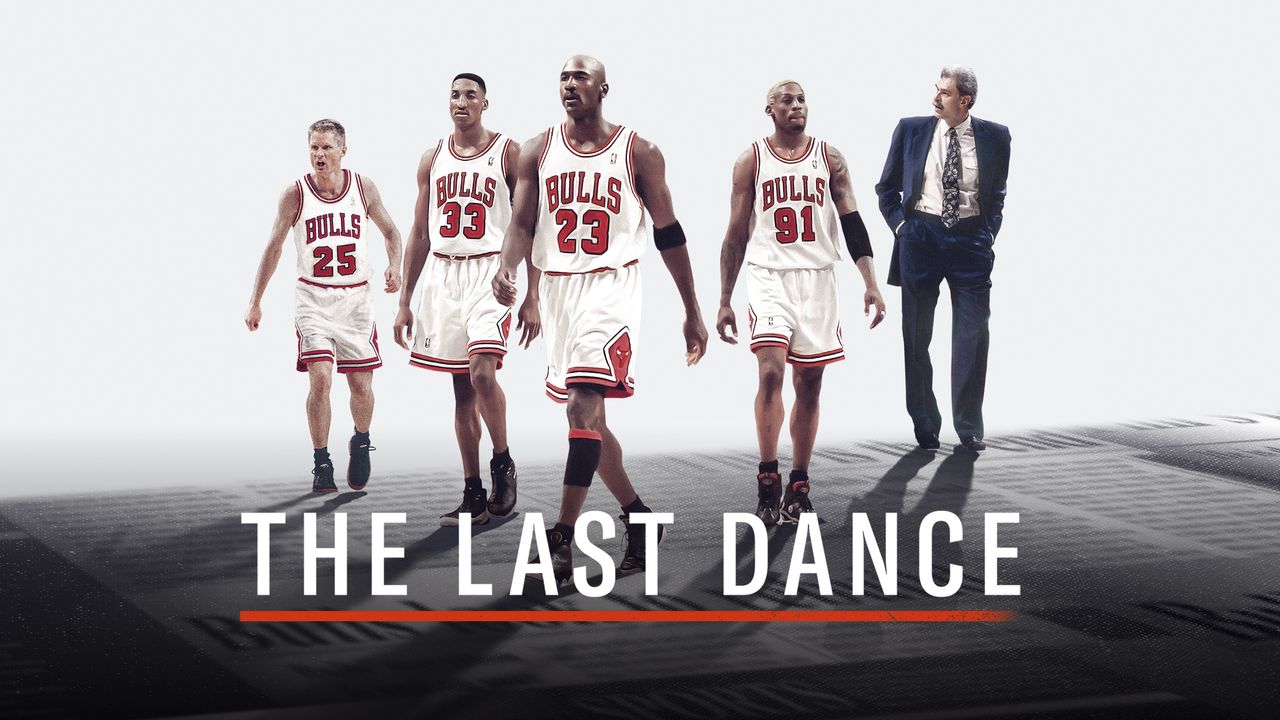
Episodes five and six of the documentary series that pulls the curtain back on the Chicago Bulls dynasty in the 90s, specifically the 1997-98 season focusses specifically on Michael Jordan, his responsibilities, his transgressions, his trials and his successes.
#1. Mamba Forever
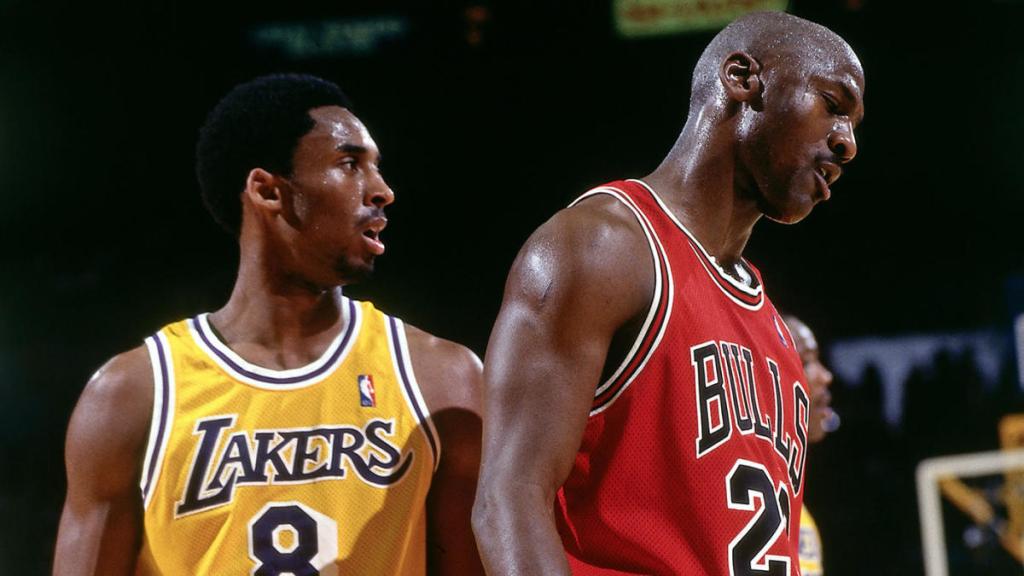
The very first visual displayed of episode five is a simple message, dedicating the episode to the loving memory of the late Kobe Bryant, which coincides with the topic of a detour in the media circus surrounding the Bulls in 1998, that being the All-Star game.
Bryant would be the youngest all-star selection in history that year and along with the rampant speculation of a Jordan retirement at the end of the year, the aura was one of a grand changing of the guard.
Kobe’s legendary competitive reputation was evident even back then as locker room footage from prior to the game was shown with Jordan saying, ‘That Laker boy is gonna take everyone one-on-one, he don’t let the game come to him, he just go out there and take it’.
In a piece to camera, which was surreal and emotional to watch given the obvious circumstances, Kobe spoke about how much he admired Michael, comparing how different growing up watching him was to actually trying to defend MJ saying, ‘You get a chance to really see, touch and feel the strength, the speed, the quickness.’
Bryant also spoke about the help and guidance he received from Jordan about the game, calling Michael, ‘My big brother’ and dismissing any arguments regarding who was the superior player, explaining that, ‘I truly hate having discussions about who would win one-on-one, what you get from me is from him’.
Jordan would be voted the MVP of the All-Star game in 1998 but seeing the two men square-off will always be considered a significant moment in basketball history as although we unfortunately never saw a finals series contested between the two, it is still rare to see two figures that define two generations of basketball colliding.
Rest in peace Kobe.
#2. It’s gotta be the shoes
Staying on course in the 97-98 season, the series points towards a regular season game against the Knicks in March, a game that with the speculation surrounding Michael, was considered Jordan’s last dance at Madison Square Garden, one of the most iconic venues in American sports history and one that Jordan highlighted as his favourite place to play.
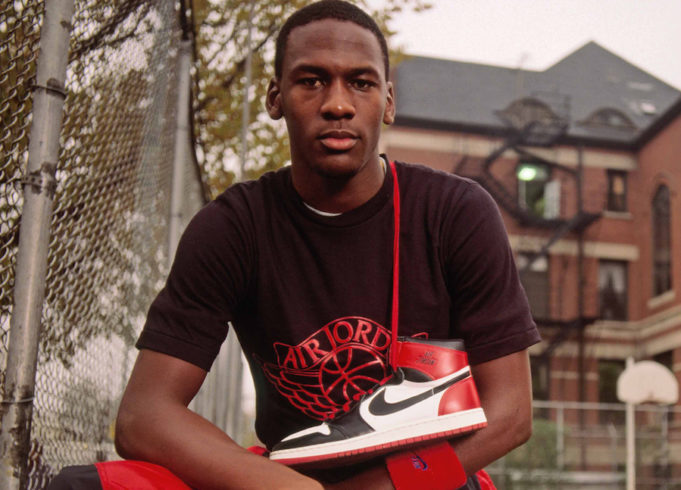
Jordan would play that game in the same famous Jordan 1s that he wore during his first game at the Garden, Jordan would say that because of the shoes, after a hard-fought win in the aforementioned Knicks game in 1998, his socks were soaked in blood.
The focus shifts back to 1984, where the Nike deal was first put forward to Jordan. In what may be considered a surprise considered how synonymous Jordan is with Nike now, MJ was adamant that he wanted to sign with Adidas, after being told by Converse that he would not be placed above their already-signed stars, namely Larry Bird, Magic Johnson and Julius Erving. Jordan was convinced to visit Nike by his mother, where his father also helped him see that Nike would provide the best offer, the documentary reports that many of the shoe companies at the time were only willing to offer Jordan $100,000, while Nike was prepared to offer $250,000 and a place as their premier basketball athlete, which morphed into an exclusive ‘Air Jordan’ shoe line and sneaker culture was changed forever.
Nike apparently looked to sell $3 million worth of Air Jordan shoes in the space of four years, they would sell $126 million in the first of those four years.
#3. The Shrug
When the Bulls won their maiden championship in 1991, only three franchises had ever defended their crown the following year, the Bulls would go into the 1992 finals looking to accomplish this feat. Standing in their way was the Portland Trail Blazers, led by Clyde ‘The Glide’ Drexler.
Drexler and Jordan were receiving a lot of comparisons at the time, with some even claiming that Drexler was better as he had a more effective three-point shot than MJ. Magic Johnson delivers a piece to camera, recalling that the night before game one, a game that Magic would be covering for NBC, that he and Jordan were playing cards and that Jordan said he would, ‘give it to him (Drexler) tomorrow’.
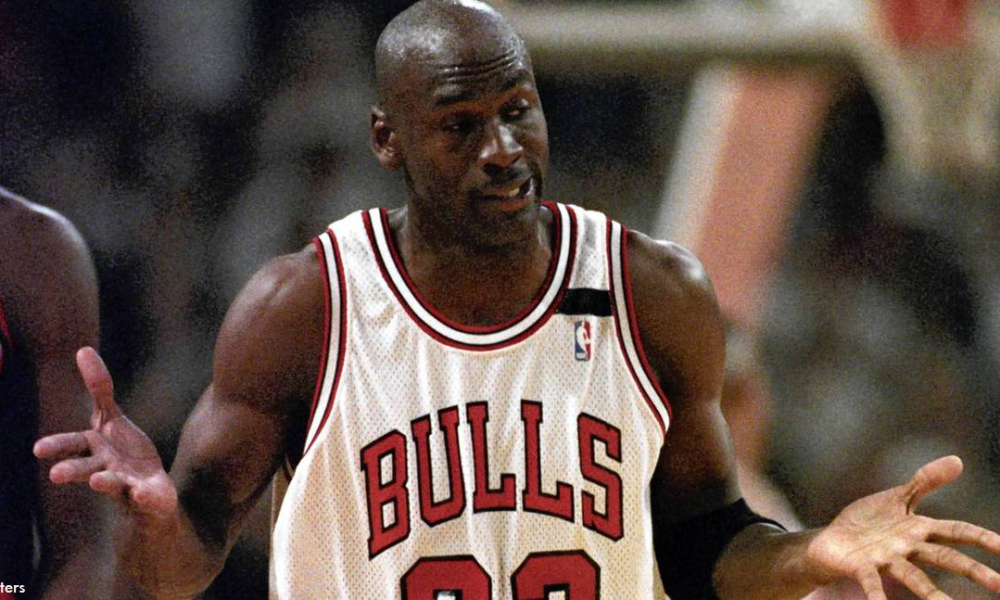
Jordan would tie the record for three-point field goals in a half in that game with six, Johnson noting that Jordan would glance over at him after each one and after the sixth, Jordan would shrug while running back down the court, an image that remains one of the most iconic in Jordan’s career and a game that has since been immortalised as ‘The Shrug Game’.
Jordan said that he respected Clyde’s game and his abilities but he took offence to the comparisons between the two, a simple shrug seemingly left any questions about MJ’s status in the dust with the Trail Blazers as the Bulls would go on to win the series, securing back-to-back championships.
#4. The Nightmare Team?
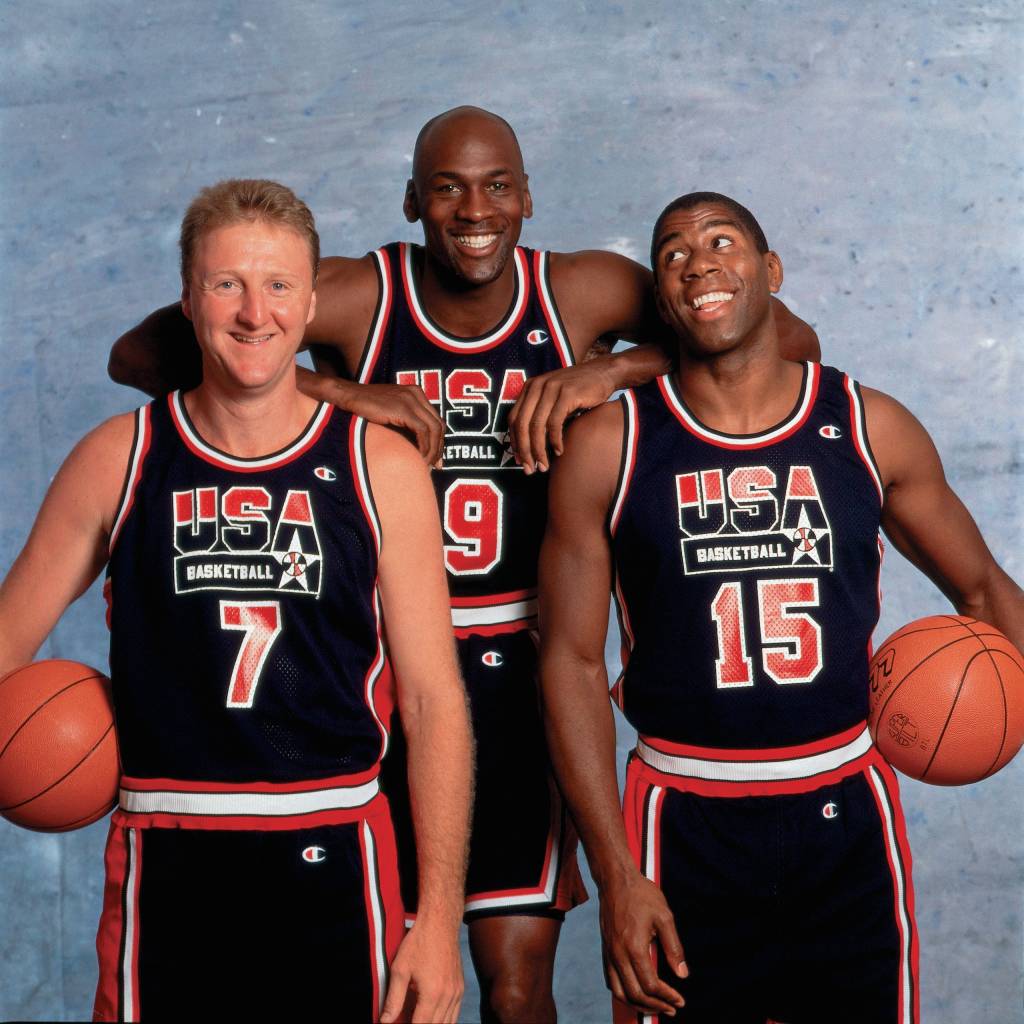
Following the 1992 season, there was a call for NBA players to make up the USA Men’s basketball team for the first time for the upcoming games in Barcelona.
Jordan claimed that the things that he treasured most from that period was the practices and the camaraderie between players, which seems quite ironic considering the friction that was present at some stages of the USA’s run in Spain.
There was immediate friction due to the omission of Isiah Thomas, the narrative that the media ran with was that Thomas was not invited to be part of the squad due to the known distain between himself and Jordan following the battles in the early 90s between Jordan’s Bulls and Thomas’ Pistons. Michael Wilbon, an ESPN commentator instead poses the argument that Jordan was not the only one that Thomas would have had issues with due to the ‘Bad Boy’ Pistons as Magic Johnson and Larry Bird also had issues with Isiah during their respective playoff series’.
In addition, Magic Johnson recalls a heated practice in Monte Carlo for the Olympic team as during a practice game, there was trash talk being exchanged between Magic and Charles Barkley, who were on one team and Jordan, who was on the other. In particular, Johnson recalls telling Jordan, ‘If you don’t turn into Air Jordan, we gonna blow you out’, from that point, Magic tells that his team went from being up by eight to down by two before they even knew what happened. The boiling point came when a foul was called in favour of Jordan and Magic threw the ball into the empty stands in frustration.
Johnson explains that for a moment, the team bus following the practice was silent until Magic turned to Barkley and joked, ‘Guess we shouldn’t have p***** the man off!’ From that point, Magic explains that it was all laughter between the team and his fondest memories are of spending time with Michael during that period.
#5. Enemies become teammates
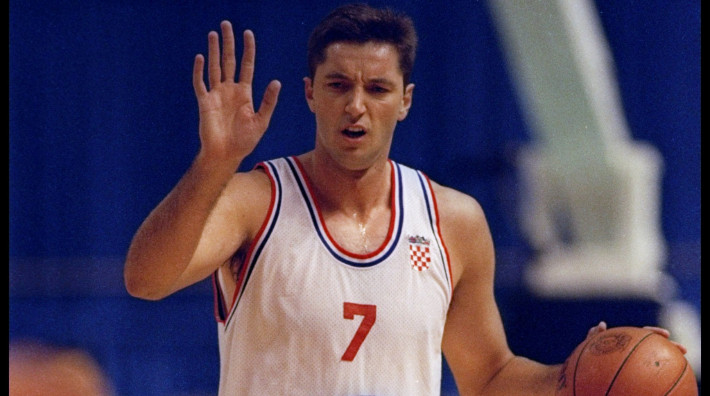
Toni Kukoc was a valuable member of the Chicago Bulls in the 90s but in 1992 he was the star player of the heavily favoured Croatian team, touted to give the USA team the biggest challenge throughout the tournament.
Kukoc at this time was especially on the radar of Michael Jordan and Scottie Pippen, as GM Jerry Krause had travelled to Europe numerous times to scout Kukoc and claimed that he was the future of the Bulls, a statement that Jordan said he didn’t appreciate while the team was still winning and that that ‘drove his energy’. In the first meeting between the USA and Croatia in the group stage of the Olympic tournament, the USA would win by 33 points, with Kukoc only scoring four in the game.
Kukoc would turn things around in the gold medal game where the USA and Croatia would meet again. Despite putting up a losing effort, Toni apparently earned the respect of Jordan, who reportedly went into the locker room following the game, commending Kukoc’s performance and toughness.
With their dominance in the 1992 Olympics, the USA men’s basketball team opened up the eyes of the world to the level of competition in the NBA and likely did wonders for the level of fandom, coverage and exposure of basketball globally, because of this, it is no surprise that that squad is seemingly immortalised as ‘The Dream Team’.
#6. ‘Republicans buy sneakers, too’
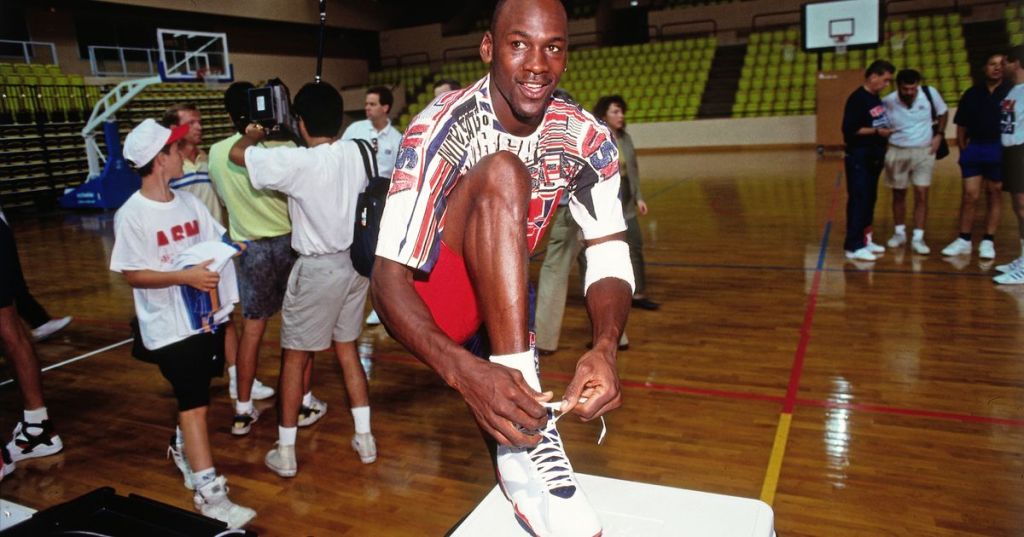
With Michael Jordan’s fame came endorsements and sponsorship deals, and with them, loyalties and obligations. This was evident through Michael’s apparent slight of Reebok at the aforementioned 1992 Olympics. Jordan was of course, a Nike athlete and Reebok was the official provider for the uniforms at the Olympics, people have pointed to the fact that Jordan was draped in the American flag during the medal ceremony, with the flag covering the Reebok logo on the team tracksuit as a swipe at the company.
Former President Barack Obama gave a piece to camera where he mused about the fragility of the reputation of a successful African-American saying, ‘Any African-American in this society that sees significant success has an added burden. And a lot of times, America’s very quick to embrace a Michael Jordan or an Oprah Winfrey or a Barack Obama, so long as it’s understood that you don’t get too controversial around broader issues of social justice’.
One of the most significant examples of this was in 1990 when North Carolina, Jordan’s home state looked like it could potentially elect their first African American member of the U.S senate in Harvey Gantt. Gantt was running against Jesse Helms who was known for being an unsavoury figure when it came to issues surrounding race.
When Jordan was reportedly asked why he hadn’t given a message in support of Gantt’s campaign, Jordan responded, ‘Republicans buy sneakers, too’, which courted controversy as it seemed to put his sponsorships above his race and politics.
Jordan claims that the comment was made in jest amongst teammates and was spun out of context, and that he did not want to speak publicly on somebody that he did not know but sent a financial contribution in support of Gantt anyway.
Regardless of how the comments were interpreted, Helms would go onto defeat Gantt in the senate race, with many wondering whether Jordan could have influenced the situation further with a public endorsement of Gantt.
#7. Shaking the pedestal
With Jordan’s position at the top of basketball, many journalists and fans were interested in seeing if MJ had any flaws, any chinks in the armour that he cultivated on the court. From this interest, Sam Smith wrote the book ‘Jordan Rules’ detailing his tough and almost tyrannical approach to his teammates, apparently telling them not to pass to certain players in crucial situations. This caused a rift in the Bulls locker room as some speculated that Horace Grant supplied a lot of the information used in the book, Grant would give a piece to camera denying this, claiming he was the scapegoat due to his good relationship with Smith.
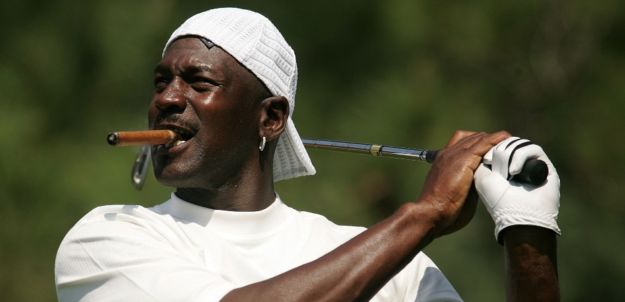
Another controversy that was brought to light was the extent of Jordan’s competitiveness as it pertained to gambling, especially in golf. Another book, this time by Richard Esquinas, titled Michael & Me, alleged that Jordan at one point owed Esquinas $1.2 million from gambling.
David Aldridge tells the story about Jordan’s first high-profile gambling incident as after the Bulls’ first title victory in 1991, they were invited to the White House, as was tradition. Jordan apparently skipped the visit as he claimed he was spending time with his family; he was reportedly instead gambling with Slim Bouler. Bouler was a golf hustler who was later charged relating to drugs and money-laundering. In his trial, police uncovered a check written by Jordan to Bouler for $57,000, Jordan was forced in the trial to admit that the check was written to settle a gambling debt.
Michael’s next gambling controversy would arise in the middle of the 1993 Eastern Conference finals against the New York Knicks.
#8. A vow of silence
The Bulls would face off against the Knicks in 1993 for a place in the NBA finals and the Knicks would take huge influence from the Detroit Pistons teams that had troubled the Bulls in previous years with a rough style of play.
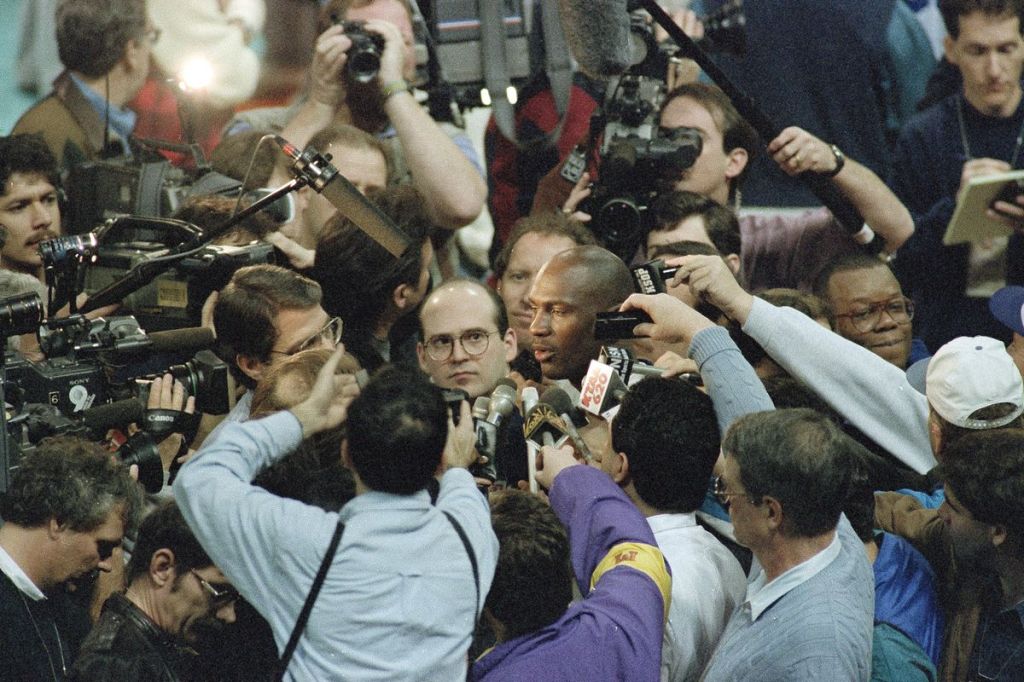
The Knicks would get the better of the Bulls in the first two games of the best-of-seven, jumping out to a 2-0 lead. The night before game two of the series however, Jordan would be spotted in an Atlantic City casino reportedly as late as 2:30 in the morning, MJ claimed that he and his father were taking a mental break and were back before one.
In the midst of the ensuing media firestorm, Jordan grew frustrated with the constant questions surrounding his gambling and refused to speak to the media. Jordan’s anger would fuel the Bulls, however as they would rally to beat the Knicks in four consecutive games to win the series 4-2.
#9. The first threepeat
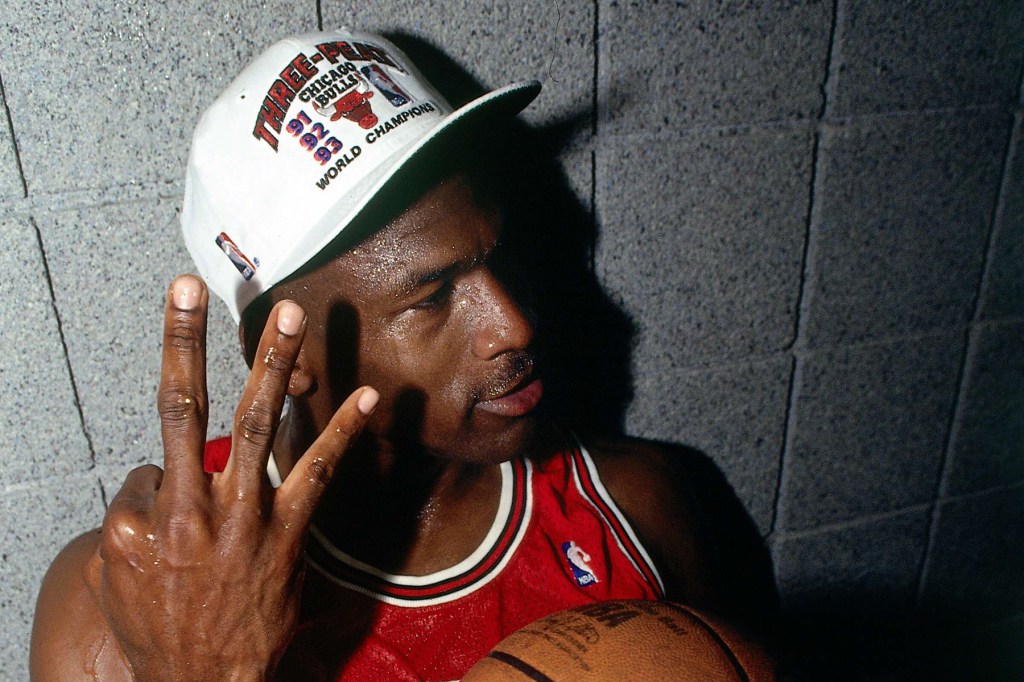
In the 1993 NBA finals, Jordan and the Bulls would meet the Phoenix Suns, led by regular season MVP Charles Barkley. The Bulls were chasing a third consecutive championship, which would have made them only the third franchise to accomplish that feat and would put Jordan above his contemporaries as Isiah Thomas and Magic Johnson had each only managed two in a row.
Jordan highlights his drive to beat the Suns being that Barkley was awarded the MVP award for the regular season instead of him, saying that, ‘Okay, fine, you can have that. I’m gonna get this’. In addition, Jordan notes Jerry Krause’s admiration for Suns player Dan Majerle’s defence and how that made Jordan want to attack against Majerle constantly to prove Krause wrong.
The series was a back and forth affair, the Bulls winning the first two games, the Suns winning the third, and the Bulls taking a 3-1 series lead in game four.
Jordan recalls before game five that Chicagoans had practically already begun celebrating, as members of the public were boarding up their windows in preparation for the celebrations in the streets. This frustrated the Suns as they found it disrespectful, Barkley would rally the Suns to win game five to bring the series to 3-2 and further rubbed salt in the wound as when he was asked to give a message to the people of Chicago before the series would be hosted for the next game in Phoenix he responded, ‘Take that s*** off the windows, you don’t need it tonight’.
As the team was boarding their plane to Phoenix, Phil Jackson recalls Jordan wanting to speak with the team where he told them that he’s only going to pack one suit, because he wants the team to rally and win the series in the next game, and they did.
#10. Driven away from the game
If one thing was clear from the coverage of the 1993 playoffs and the 1997-98 season in episode six, it was that the media was exhausting Michael Jordan. Many members of the Bulls note that the feeling surrounding the third championship was more relief than joy, especially in Michael’s case.
Jordan himself saying, ‘If I had the chance to do it all again, I would never wanna be considered a role model. It’s like a game that’s stacked against me. There’s no way I can win.’
In footage from a car-ride in 1998 prior to the playoffs, Michael talks about leaving the sport, expressing that, ‘No-one wants me to walk out, knowing that I can still play the game. But I wanna leave two years before my skills show that I can’t play this game. I think Patrick (Ewing) said that they’ll have to carry him off the court. Nobody gonna carry me off the court, I wanna walk off the court. A lot of people say, well, you’re gonna miss it. I’m not sure if I’m gonna miss it. I don’t think I’m gonna miss it.
 The Inbound Observer