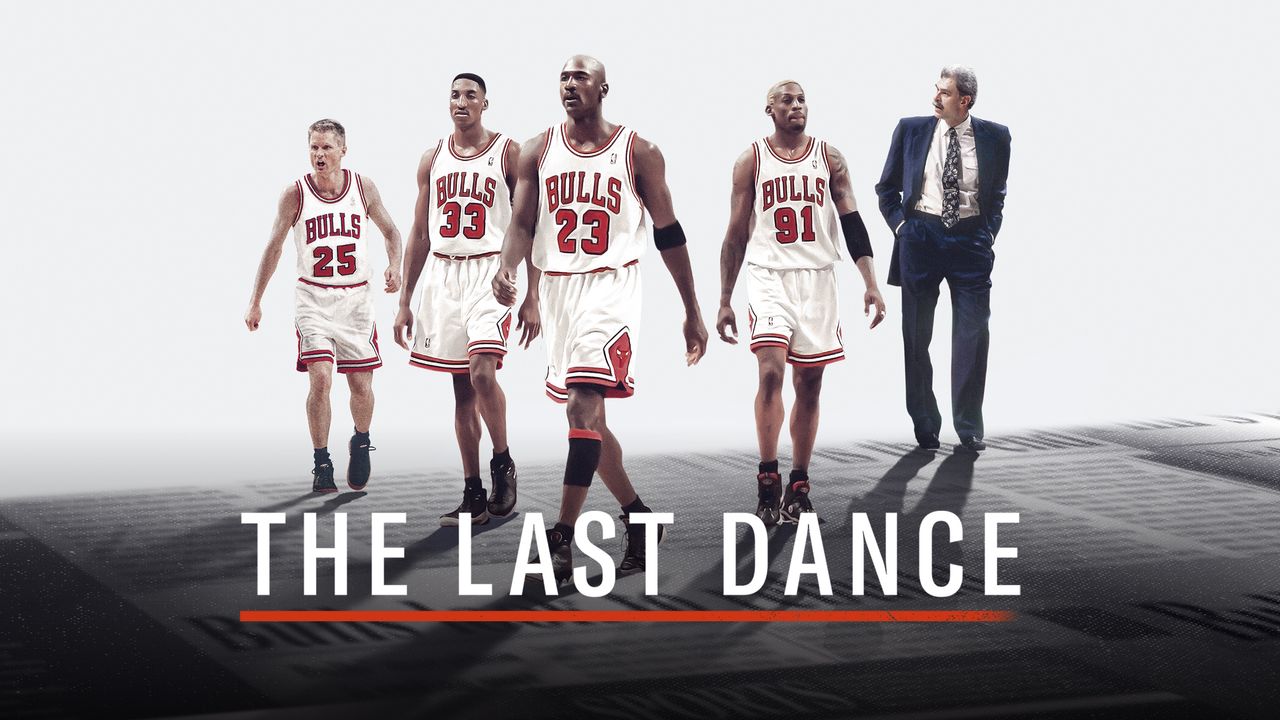
A large part of the narrative structure that threads through both episodes seven and eight is the Bulls’ journey through the first two rounds of the 1998 NBA playoffs, with episode seven being centred around their first round matchup with the New Jersey Nets and episode eight featuring how Chicago overcame the Charlotte Hornets in the Eastern Conference semi-finals.
#1. The road to the 1998 Eastern Conference Finals
The media’s opinion surrounding the first round matchup between the Bulls and the Nets leaned heavily towards the Bulls, with many predicting that Chicago would sweep New Jersey in the series, with Michael Jordan saying prior to the series that for the Bulls to even lose a game to the Nets, they’d have to fall asleep. However, game one did not provide many positive signs of that coming to fruition, as New Jersey would provide stiff competition for the heavily favoured Bulls, while the Bulls would win eventually, the Nets were able to drag the game into overtime.
After the focus of the documentary shifts towards Jordan’s teammates, the attention is brought back to the aforementioned series against the Nets where the Bulls are buoyed by a good performance by their bench to pull off another close victory in game two, before riding that momentum to deliver on the expectations put on them prior to the matchup with a win in game three to secure a 3-0 sweep of the best-of-five series.
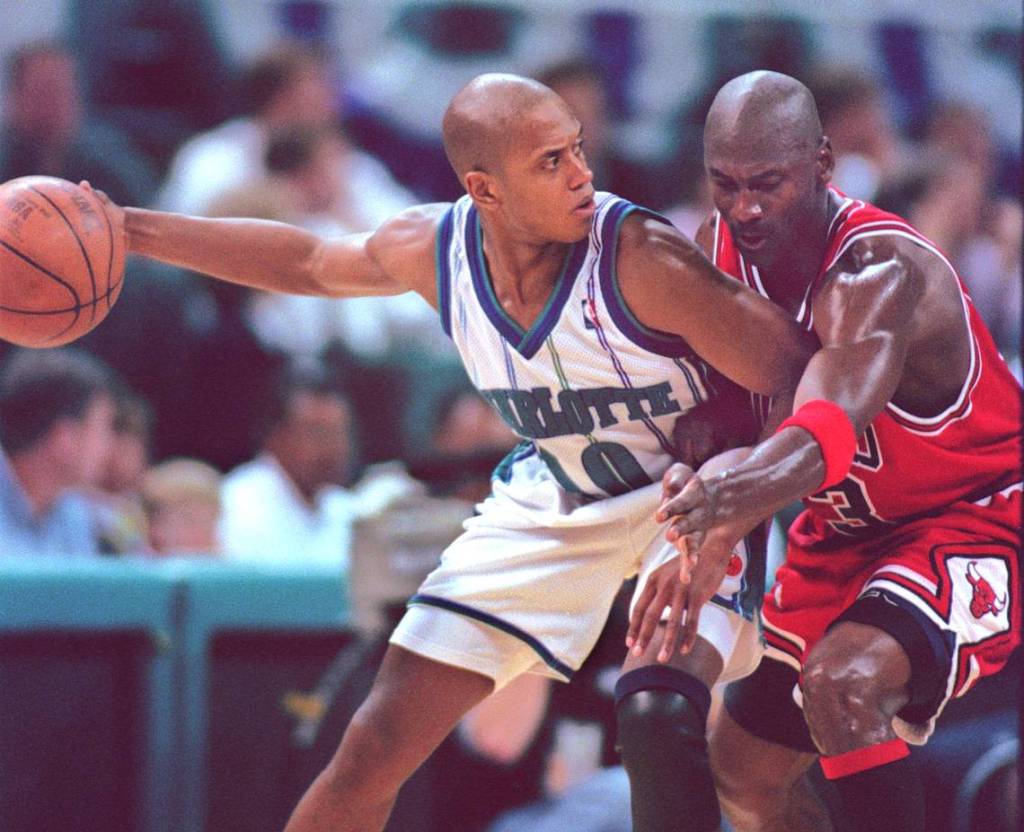
Again, episode eight focusses on the 1998 Eastern Conference semi-finals matchup between the Chicago Bulls and the Charlotte Hornets, another series the Bulls were expected to win comfortably, which in game one, they did. However, the drama of this series emerges in game two as former Chicago Bull BJ Armstrong, who was playing for Charlotte in the aforementioned series recalls how he used his knowledge of the Bulls that he got by playing with them to have an influential performance and help the Hornets to win game two, tying the series at 1-1.
After hitting the game-winning shot and shouting in celebration towards the Bulls bench, specific focus is put on how this type of behaviour motivated Michael to play harder in response, and he did, as MJ attacked Armstrong repeatedly throughout the rest of the series and the Bulls would go on to win the next four games to win the series 4-1, setting up a showdown with the Indiana Pacers in the Eastern Conference Finals.
#2. A death in the family
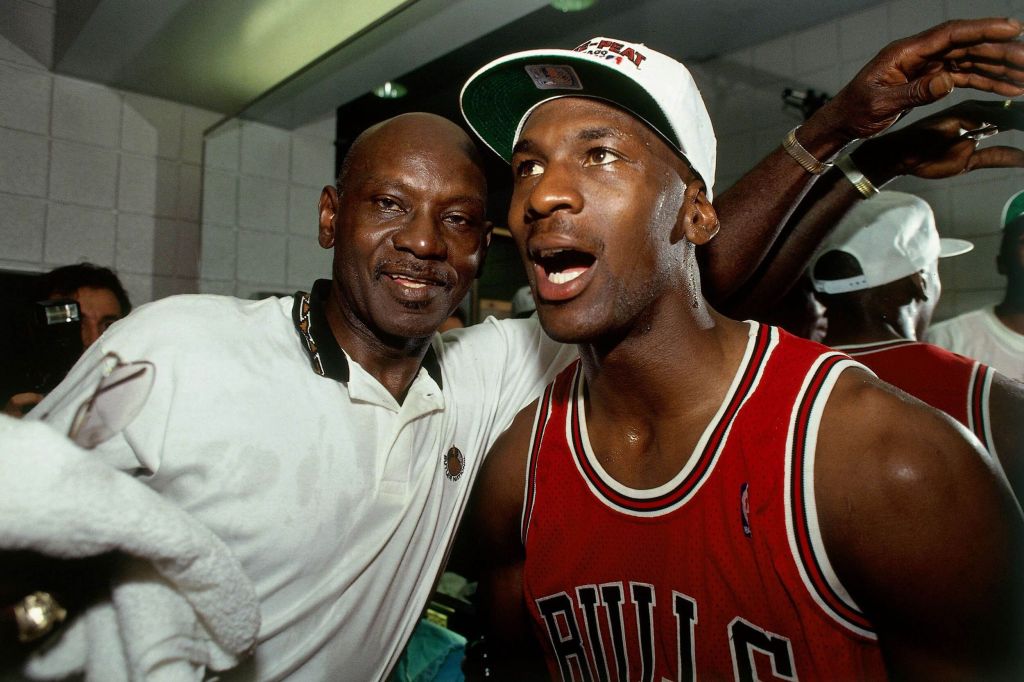
With rumours of Jordan’s retirement still rampant during the 1998 playoffs, Hannah Storm, formerly of NBC Sports notes how Jordan’s body language and attitude in 1998 was reminiscent of his attitude following the 1993 season.
The focus then flashes back to the end of the 1993 season, where MJ recalls sitting in the gym with his father and knowing that he had potentially played his last game. Michael continues talking about his father saying, ‘He was my rock. You know, we were very close’. There are then multiple images shown and multiple clips of footage played that emphasise the incredible influence that James Jordan had on his son’s life, from childhood to the heights of superstardom that a minute amount of people will ever reach. Jordan continuing, ‘He’s a voice of reason that always drove me and challenged me, that’s the type of father I had’.
For those already familiar with Michael Jordan and the tragedy that befell his family in 1993, this segment can be quite tough to watch, seeing how highly everyone speaks of James Jordan and even 27 years after the incident, the pain on MJ’s face when he speaks about his relationship with his father is heart-breaking.
Of course, for those that may not know, the tragedy referred to in this documentary is the horrible murder of Michael Jordan’s father James in 1993, the story goes that he was driving late at night and pulled over on the side of the road to take a nap, where he was reportedly awoken by his assailant, shot in the chest, robbed and his body dumped in a creek near the border between North and South Carolina.
Unfortunately for Michael and his family, the media circus that had plagued him throughout the 1993 season did not subside or shy away from this sensitive subject, with many media outlets theorising that James Jordan’s murder could have been a result of Michael’s well-known history of gambling, a sentiment that has since been condemned as gross speculation without any evidence.
#3. From the foul line to the batter’s box
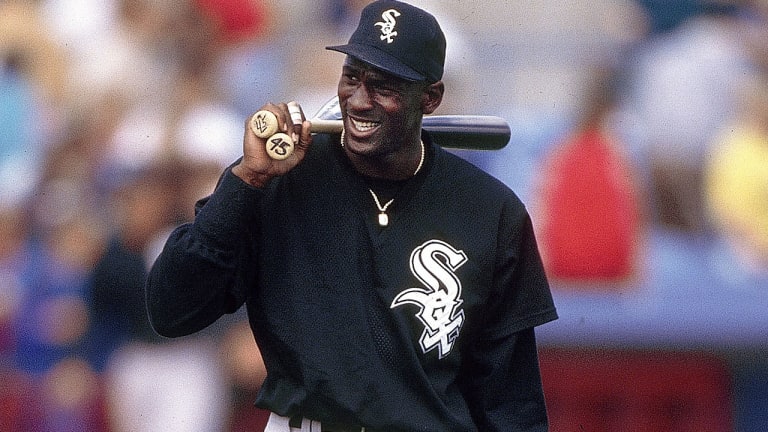
Following his father’s death and the media harassment that came with it, Michael Jordan decided to retire from basketball in 1993 and immediately expressed a desire to transition into baseball, a decision that some may have found ridiculous, had it not been for Jordan’s recount of his last conversation with his father, saying, ‘We were debating, me and him. We were debating about me playing baseball’. It is noted that James Jordan always wanted Michael to play baseball growing up and that Jordan was considering retiring a year earlier in 1992, but decided not to in order to complete his Olympic campaign and vie for a third championship with the Bulls, to eclipse Magic Johnson and Larry Bird.
This information debunks the theory that MJ retired in 1993 in order to serve a suspension by the NBA as punishment for his gambling, but was kept quiet to preserve his image, a theory that both Michael and the NBA Commissioner at the time, the late David Stern deny, with Brian McIntyre, former NBA senior VP of Public Relations dismissing the notion as ‘total bullshit’.
Jordan, elaborating on his decision to leave said, ‘At that time, we were coming off of three championships. I fulfilled my responsibility to the city, to the Bulls, my teammates’.
#4. ‘Bag it, Michael!’
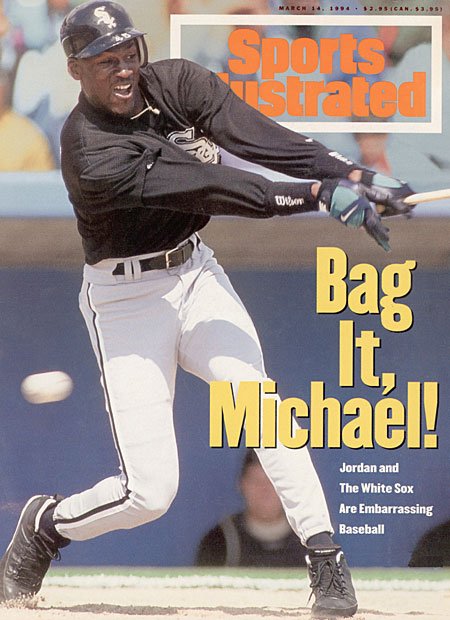
Michael Jordan would sign with the Birmingham Barons, the Double-A affiliate of the MLB’s Chicago White Sox, like the Bulls, also owned by Jerry Reinsdorf. It is noted that although many fans saw and probably still see Jordan’s baseball career as ill-advised, he did start his career with an impressive 13-game hitting streak.
Once Jordan began to find difficulties on the diamond however, the national media did not hesitate to jump at the opportunity to ridicule him, particularly with Sports Illustrated featuring Jordan on the cover of one of their magazines, badly missing a pitch with the title ‘Bag it, Michael! Jordan and the White Sox are embarrassing baseball’.
Jordan recalls this cover, saying that he felt betrayed as he was not even interviewed for the article, that the reporters came to the game simply to critique him without understanding his passion for the sport. Despite this, it is clear that baseball was therapeutic for Jordan as it allowed him to come to terms with his father’s death.
In terms of MJ’s ability on the baseball field, by the end of the season, Jordan’s batting average sat at a .202 and he managed 50 RBIs (Runs Batted In) a respectable stat line when considering his inexperience and proof of his otherworldly work ethic.
#5. The perfectly bad teammate
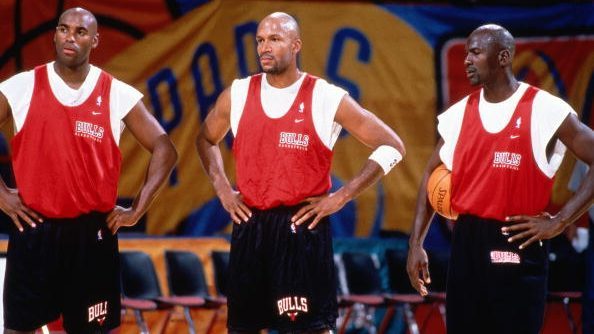
Going back to the Bulls’ lacklustre performance in game one of the first round of the 1998 playoffs against the Nets, Toni Kukoc noted that, ‘Everybody was always on alert around Michael after a bad game like that’.
This sentiment is echoed by many other former teammates of Jordan such as Steve Kerr, Scott Burrell, Will Perdue, Bill Wennington and Jud Buechler, telling stories about Jordan’s trash talk during practices and how he would push players to meet his standards.
While Jordan’s methods may seem intense for some, he consistently points towards a want to see players that he saw potential in succeed, which in the context of what we have learnt from this series makes sense due to MJ’s competitive home environment growing up.
When questioned on whether his famous intensity has been detrimental to him being perceived as a nice guy, Jordan gives an impassioned speech about what it meant to be a leader for a team that was as successful as the Bulls and the standards that came with it for his teammates, by the end of the speech, Jordan’s voice was noticeably strained and tears were in his eyes.
#6. Scottie’s team
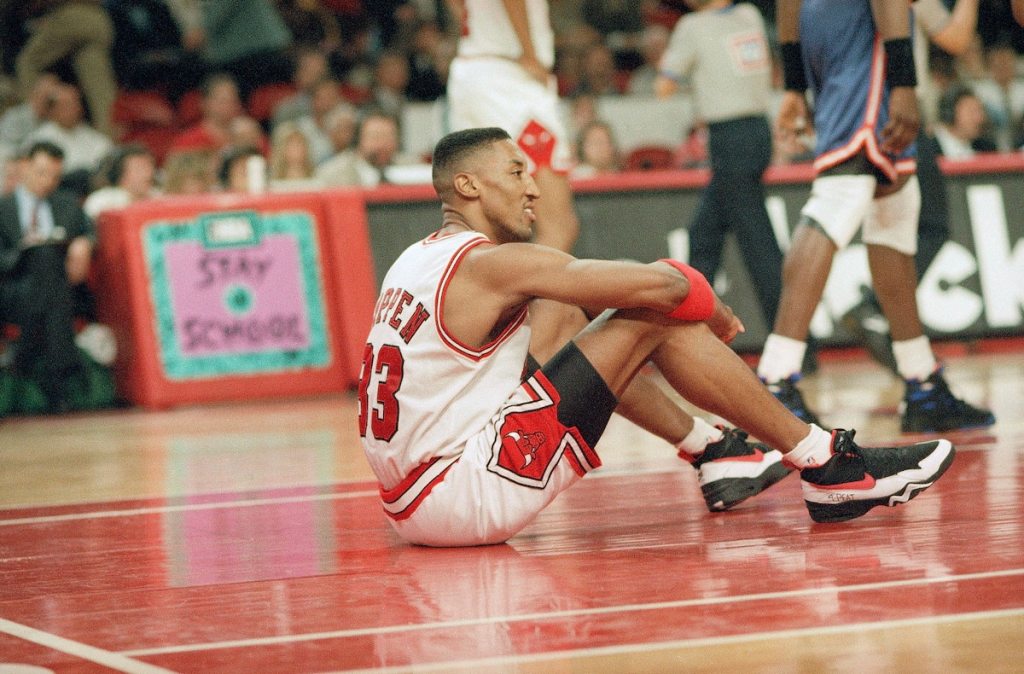
In the 1993-94 season following Michael Jordan’s shocking retirement, the responsibility was immediately put on Scottie Pippen’s shoulders to lead the team to further success and throughout the regular season, the Bulls were still dangerous, with Steve Kerr, when comparing Pippen’s leadership to Jordan’s saying, ‘Scottie was the softer touch’.
Another key figure in the Bulls’ success was the impressive play of then-rookie Toni Kukoc. The Bulls would sweep the Cleveland Cavaliers in the first round of the 1994 playoffs but would be matched up against the New York Knicks in the Eastern Conference semi-finals and found themselves 2-0 down in the series.
The reason that game three is significant to this season is that the game was tied at 102-102 with 1.8 seconds left on the clock, Phil Jackson called a timeout and planned a play that would end with Toni Kukoc taking the potentially game-winning shot, something that angered Scottie as he felt that that was one of his responsibilities as the leader of the team. In response, Pippen refused to re-enter the game and while Kukoc would make the shot to win game three for the Bulls, the feeling in the locker room was that Scottie had quit on the team. This led to a tearful speech by Bill Cartwright in the locker room following the victory and a subsequent apology by Pippen, the Bulls would give the Knicks a good fight following this setback, taking the series to a deciding seventh game but would ultimately fall, losing the series 4-3.
While the Bulls may not have been able to deliver a championship in the ’94 playoffs, this stands as an example of the camaraderie that drove the Bulls’ dynasty in the 90’s.
#7. The ballad of LaBradford Smith
Following game two of the 1998 Eastern Conference semi-finals against the Hornets, focus was put on how Jordan would motivate himself, Mark Vancil, the author of ‘Rare Air’ noting that Jordan would ‘find a game within the game to keep him interested’, likening it to ‘throwing meat to a tiger’.
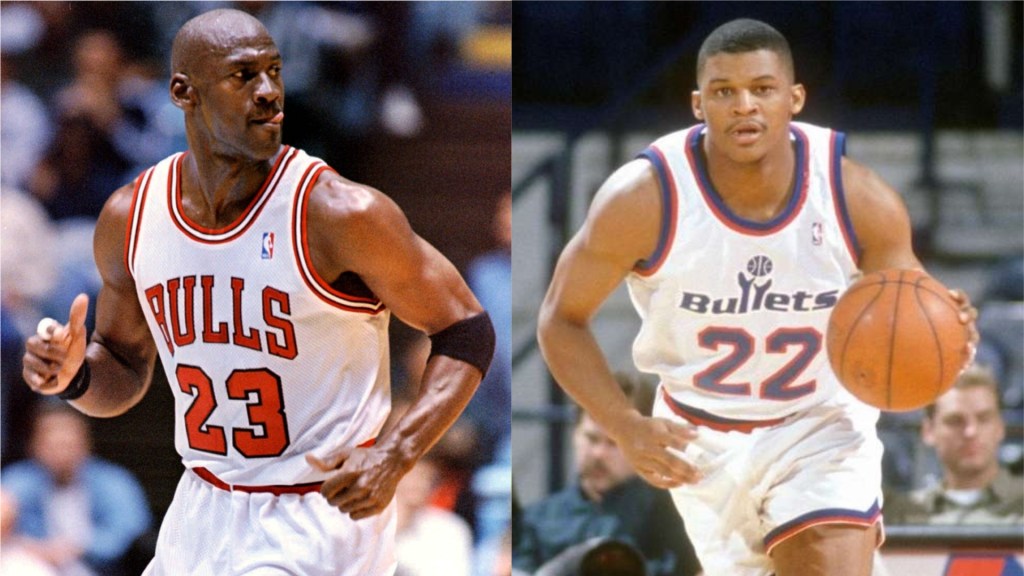
On this note, BJ Armstrong and David Aldridge both reference an exchange between Michael Jordan and a then-rookie for the Washington Bullets in 1993, LaBradford Smith. In a game between the Bullets and the Bulls, Smith would score 37 points and after the game would, according to Jordan, approach him after the game and say, ‘Nice game, Mike’.
This reportedly angered Jordan as Armstrong recalls, ‘We played them back-to-back. So, we’re flying to Washington. He said, Tomorrow, in the first half, I’m gonna have what this kid had in the game’.
Jordan would deliver on this promise as he would score 36 points in the first half and 47 points total in the game to lead the Bulls to victory. The punchline of this story being that decades after the reported exchange, Jordan admitted that LaBradford Smith never approached him after the game and insulted him, he made it up to motivate himself mentally.
#8. ‘I’m back’
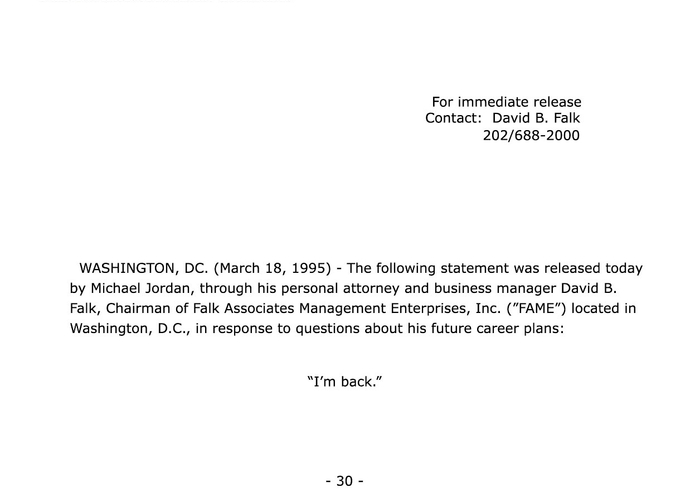
In 1995, in the midst of a player strike, the MLB proposed the idea of utilising minor league players as replacement players for games. Jordan would refuse to participate and walked out of the Chicago White Sox. Some time later, BJ Armstrong recalls getting a call from MJ asking to hang out. Armstrong and Michael met for a meal and talked until BJ had to go to a Bulls practice, he invited Jordan along and that arguably sparked his return to basketball.
Jordan would send out a fax simply saying, ‘I’m back’.
In the 1994-95 season, with the loss of Horace Grant to Orlando, the Bulls struggled but with Jordan back, the Bulls were rejuvenated. That included ‘The Double Nickel Game’ the game in which Jordan in only his fifth game back, lit up Madison Square Garden with a 55-point domination of the New York Knicks.
#9. ‘45 isn’t 23’
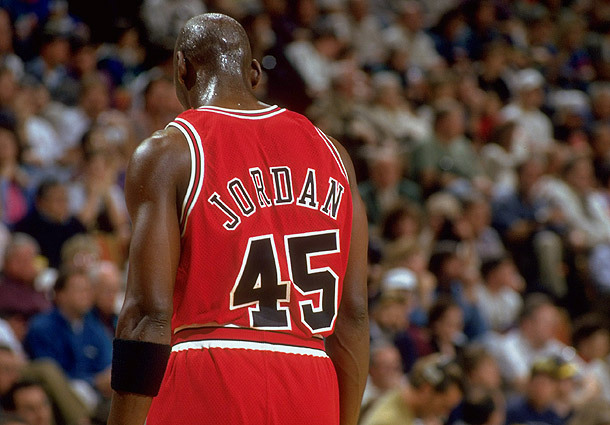
The Bulls, bolstered by the return of Michael Jordan, would meet the Orlando Magic in the 1995 Eastern Conference semi-finals, where in game one, Nick Anderson would shock Jordan by stealing the ball away from him in a pivotal moment to win the game for the Magic. Following the game, Nick Anderson was reported as saying, ‘45 isn’t 23’, in reference to the fact that Jordan had returned donning the number 45 jersey instead of his famous 23 because he did not want to wear that number without his father being there to watch him.
Jordan would rise to this comment, however, as in game two, the number 23 was back where it belonged, and MJ proved why that number is now one of the most significant in the sport of basketball as he would score 38 points to tie the series at 1-1.
Despite this outburst, Jordan did not have the energy to rally his team to a championship in 1995 as he relents that he did not have a large amount of time to realign his body to the sport of basketball and the Magic would win games three, five and six to eliminate the Bulls and win the series 4-2.
#10. Winning it on Father’s Day
After a disappointing exit in the playoffs at the hands of the Orlando Magic, Jordan was eager to get back to working out in the offseason as quick as possible, however he was scheduled to begin filming his then-upcoming film Space Jam that summer, as a compromise, Jordan requested a facility so that he could maintain his preparation for the next season as well as film and Warner Bros built Jordan a facility with a gym and a full five-on-five basketball court.
This would prove useful as Jordan would spend the summer inviting the league’s elite players to play practice games with him to prepare his body for the 1995-96 season and to subtly scout the players he was coming up against.
That season, the Bulls would break the record for the most wins in a regular season campaign, finishing with a dominant record of 72-10, releasing commemorative hats that while celebrating the accomplishment, acknowledged that it, ‘Don’t mean a thing without the ring’.
That sentiment would carry the Bulls through the playoffs, getting to the NBA Finals and only losing one game along the way, that playoff run also included a 4-0 sweep of the team that had eliminated them the previous year, the Magic.
The Bulls, looking for their fourth NBA championship, would come up against the Seattle SuperSonics, led by that year’s Defensive Player of the Year, ‘The Glove’ Gary Payton. During the series, Jordan recalls going out for a meal and seeing Sonics head coach George Karl sat on the other side of the restaurant and that Karl did not come up to speak to him, instead just walking right past him. Jordan saying, ‘That’s all I needed. That’s all I needed for him to do that and it became personal with me.’
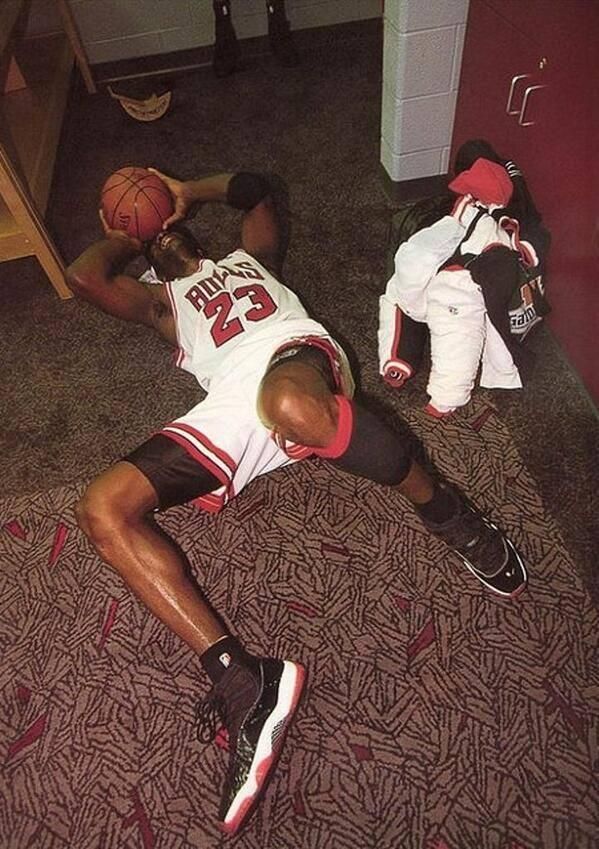
Jordan would take this motivation and use it to push past a tough defensive Seattle team, winning the series 4-2 on Father’s Day. Jordan would go to the locker room early after the game to be alone, later being famously pictured laid on the floor of the locker room, clutching the game ball and crying, those images being some of the most poignant in sporting history when paired with the bittersweet context.
 The Inbound Observer