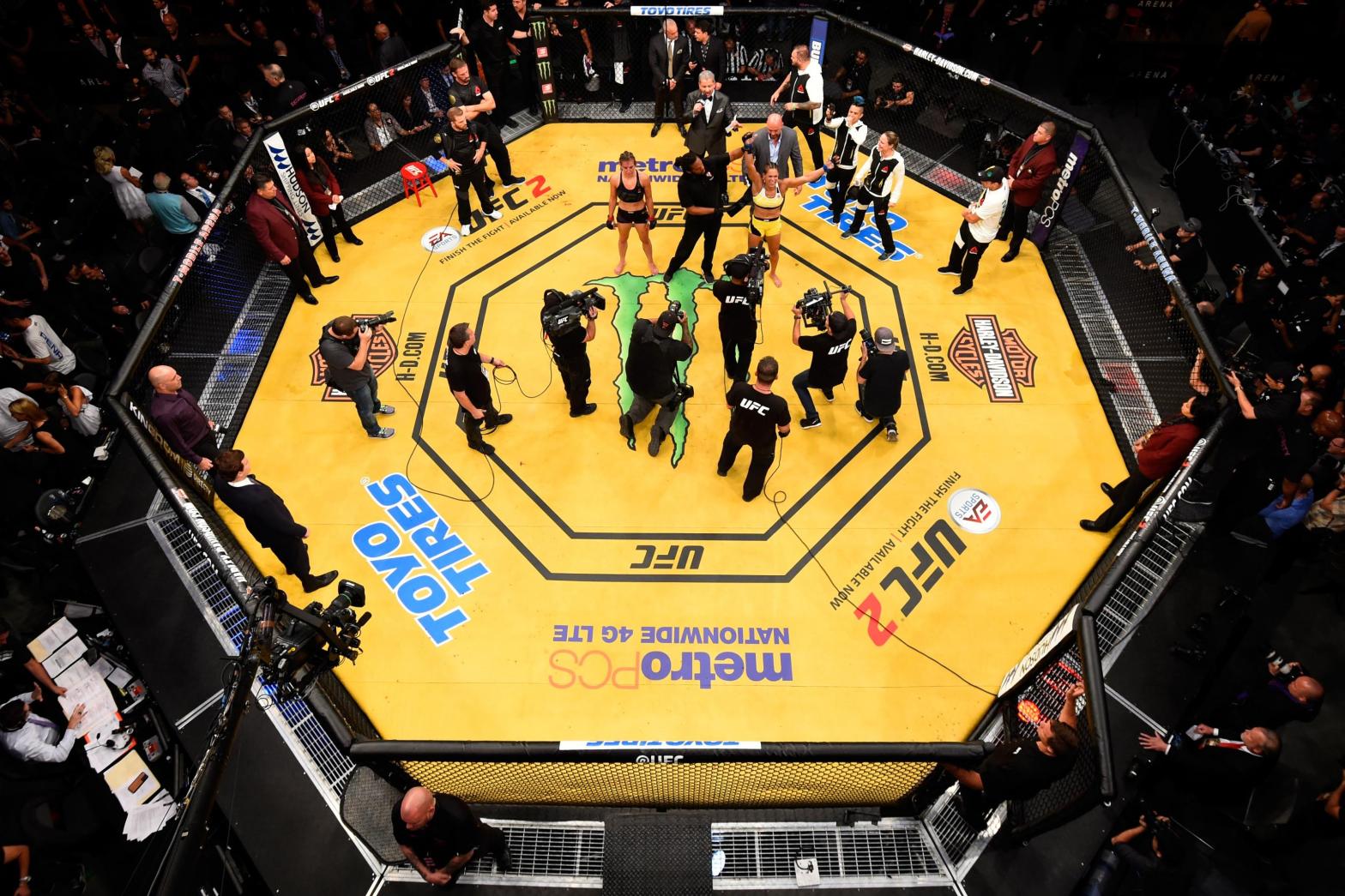
On July 9th, 2016, the UFC celebrated it’s 200th numbered pay-per-view event with what was supposed to be the biggest event in the promotion’s history. What fans were given instead was an event that was big on paper but seemingly cursed from the beginning.
Ever-changing headliners:
The originally scheduled main event was the hotly anticipated rematch between Conor McGregor and Nate Diaz, the first fight between the two being the event with the most PPV buys in company history at the time.
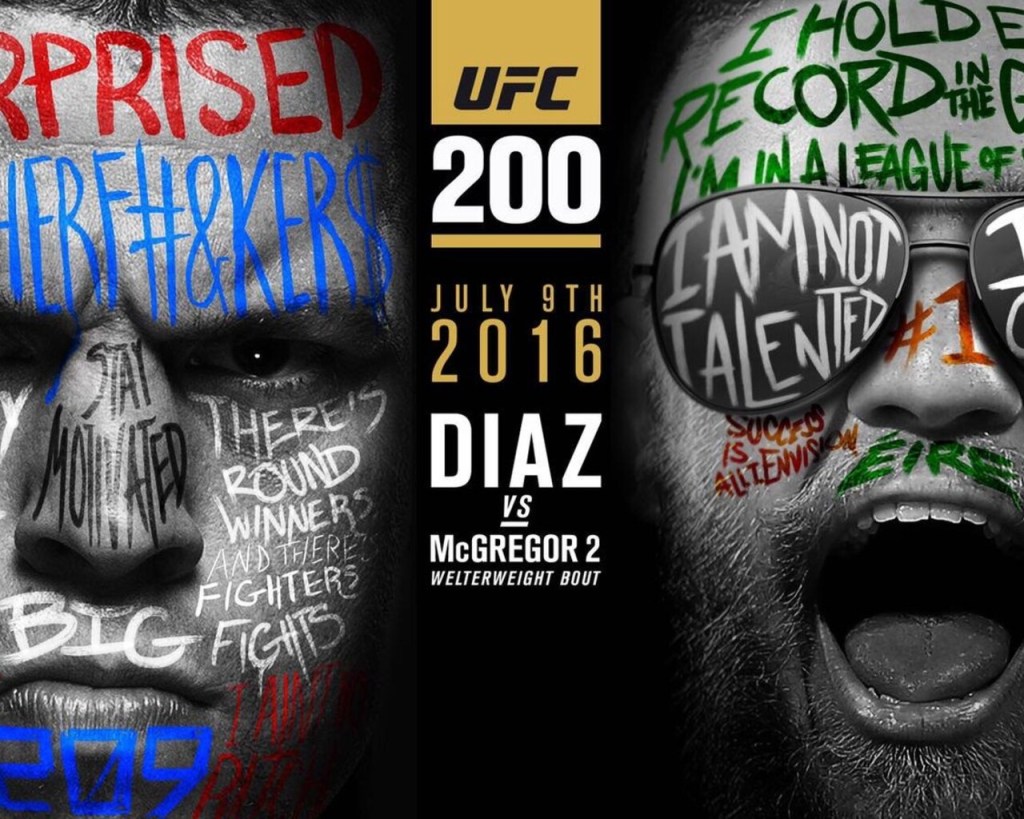
The fight was curiously pulled from the event after McGregor refused to attend a press conference to promote the event. McGregor claimed that he and the UFC had agreed to a lighter press schedule for the event so he could focus on the fight.
The UFC would not backtrack on their decision however, prompting McGregor to announce his retirement on Twitter, a tactic that McGregor fans would become all too familiar with when negotiations between the Notorious One and the UFC reach an impasse.
McGregor and Diaz’s showdown was then rescheduled for UFC 202 where it would again draw the most PPV buys in company history, while UFC 200 would not even eclipse UFC 100 in terms of buys.
The main event was then changed to feature another of the sport’s most bitter rivalries in a UFC Light Heavyweight Championship rematch between Daniel Cormier and Jon Jones.
This fight would be cancelled three days before the event as it was announced that Jones had failed an out-of-competition drug test. Cormier would still fight on the event, in a non-title bout against former Middleweight champion Anderson Silva.
The UFC would then announce the already scheduled UFC Women’s Bantamweight Championship fight between Miesha Tate and Amanda Nunes as the new main event for the event.
Do you see me now?
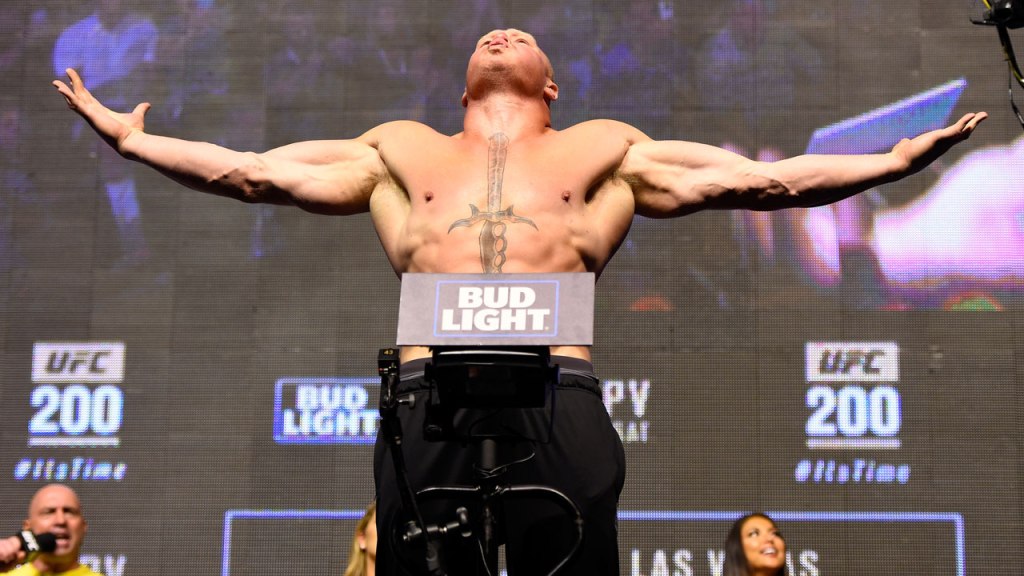
One of the biggest stories going into UFC 200 was the return of former UFC Heavyweight champion Brock Lesnar; Lesnar would be fighting in the UFC for the first time since a defeat to Alistair Overeem in 2011.
The problems surrounding Lesnar’s involvement in the event would arise even before it was officially announced as MMA reporter Ariel Helwani would break the news that Lesnar was close to finalising a return, mere hours before the UFC were planning to announce the news in a trailer for UFC 200 during the broadcast of UFC 199.
As a result, Helwani was ejected from the arena during UFC 199 and told that he was banned from reporting on UFC events for life, a decision that brought the UFC major backlash, especially after Helwani gave a tearful account of the events on his show The MMA Hour. The UFC would eventually reinstate his media privileges.
Another controversy surrounding Lesnar’s involvement was the fact that he was given an exemption from the strict regulations put on other returning fighters by the UFC’s anti-doping partner company USADA. Lesnar was obligated to go through a four-month window of random drug tests before being eligible for competition again, a regulation that the UFC was able to waive due to ‘exceptional circumstances’, the only time the UFC has made such a ruling.
Star-studded cast fails to ignite:
With all the pre-fight confusion in the rear-view mirror, many UFC fans were simply hoping for the event to deliver exciting fights to soften the blow of the cancelled bouts.
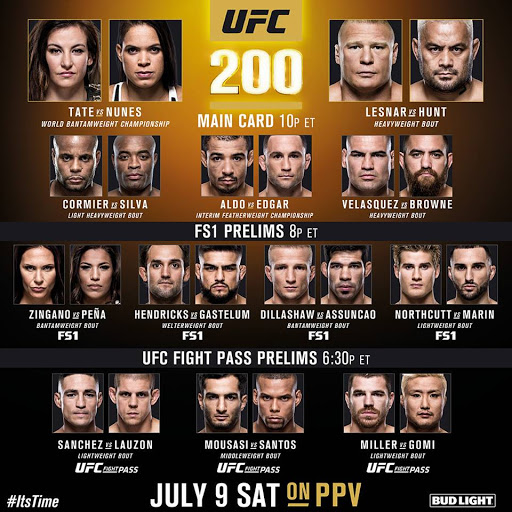
UFC 200 started brightly, with every bout on the early-prelims ending in first-round knockouts for Jim Miller (the only fighter other than Brock Lesnar to feature on both UFC 100 & 200), Gegard Mousasi and Joe Lauzon.
The preliminary card, however, would end in all four fights going to the judges’ scorecards with Sage Northcutt, T.J. Dillashaw, Kelvin Gastelum and Cat Zingano all earning unanimous decision victories. There were solid performances especially Dillashaw avenging a previous defeat to Raphael Assuncao but after the events of the early prelims, four straight fights going the distance just seemed to tire out the audience in the T-Mobile Arena in Las Vegas.
The main card would open with a bounce back performance from Cain Velasquez, who had lost the UFC Heavyweight Championship to Fabricio Werdum in his previous fight. Velasquez would knock out Travis Browne with three seconds remaining in the opening round to secure what would be the final win of his MMA career.
Any hope for the rest of the main card would quickly vanish with another three unanimous decision victories. Jose Aldo would out-point Frankie Edgar for the interim UFC Featherweight Championship in a contest where Aldo showcased all the skills that had previously helped him to the longest championship reign in Featherweight history but lacked the same instinct to pursue the finish that he had shown in the past, perhaps a result of his swift knockout loss to Conor McGregor in his previous fight.
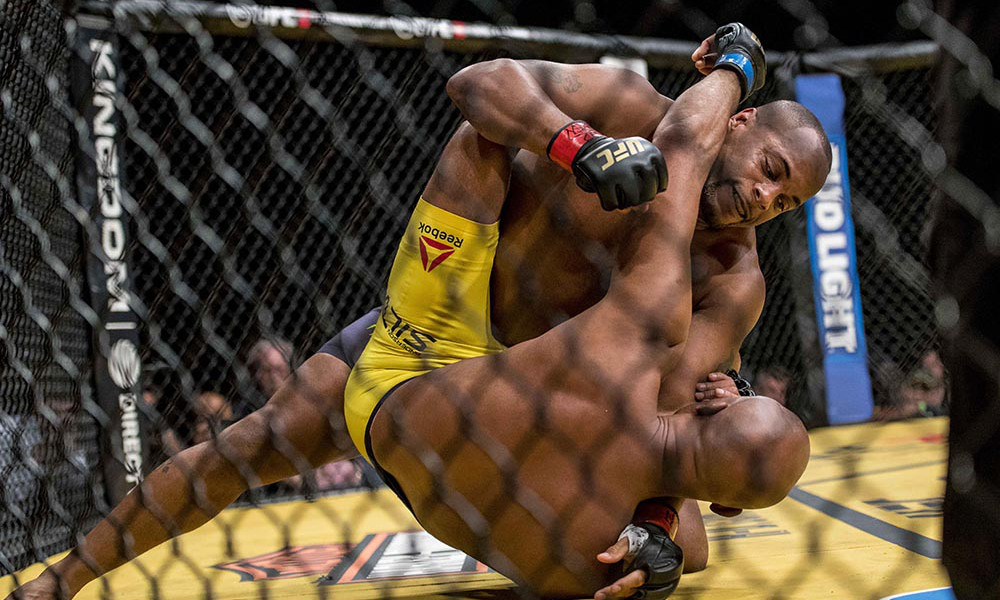
Daniel Cormier would then stifle the slick striking of Anderson Silva, much to the dismay of fans to earn his decision victory. Cormier would lean heavily on his superior wrestling, landing three out of three successful takedowns and as a result, out striking Silva 153-30 in the contest.
A similar situation would play out in the next contest with Brock Lesnar defeating another beloved striker in Mark Hunt. While Lesnar would enjoy a unanimous decision victory on the night, this would not last long as it was announced that he had failed an out-of-competition drug test, as well as an additional test on the night of the event. As a result, Lesnar was banned for one year, and his victory was overturned to a no-contest.
This fight would begin a lengthy legal battle between Hunt and the UFC as Hunt would file a lawsuit against the promotion, accusing the UFC of fraud and conspiracy in their efforts to allow Lesnar to compete at the event.
The main event would pit newly minted UFC Women’s Bantamweight champion Miesha Tate against Amanda Nunes. The fight would end quickly as Nunes was able to secure a submission victory three minutes into the first round via rear-naked-choke.
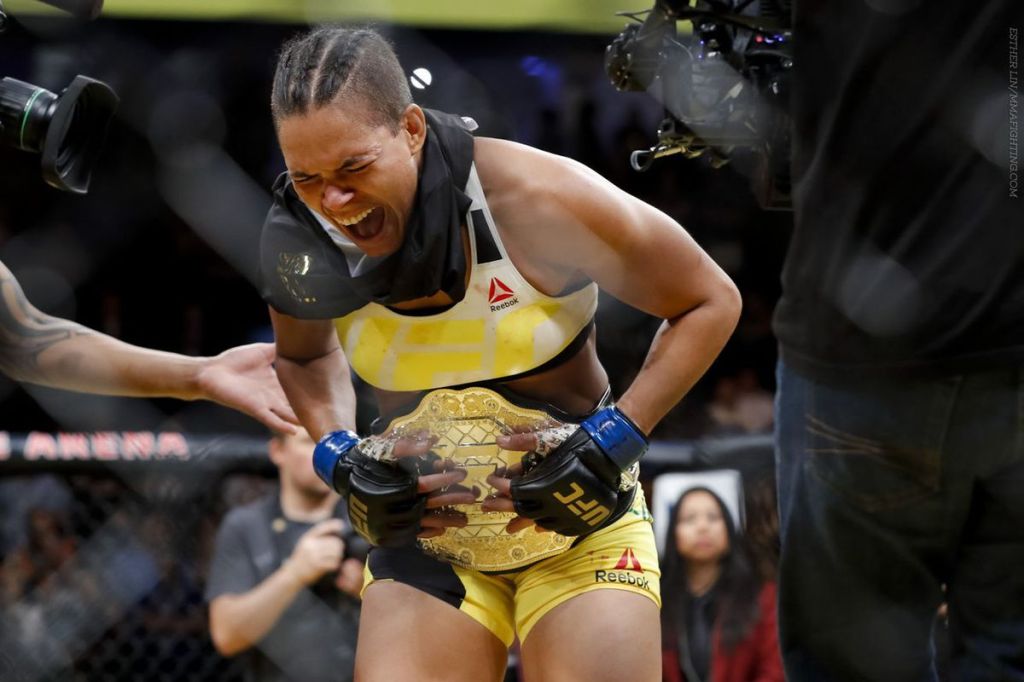
While in hindsight, this fight stands as the coronation of the woman who would arguably become the greatest female mixed martial artist of all time, at the time, this fight was just another shock in the Women’s Bantamweight division following Ronda Rousey’s defeat to Holly Holm.
Ronda had famously lost the championship to Holm at UFC 193 and while Rousey took a break from the sport, Holm agreed to defend her championship against Tate at UFC 196, a fight that she would lose by submission in the fifth round, with UFC President Dana White even saying following the event that Holm should have waited for a blockbuster rematch with Rousey.
With Holm’s loss, there was a large amount of uncertainty surrounding the division as the clear fight to make was the aforementioned rematch between Holm and Rousey and a new potential matchup between Tate and Rousey was not an exciting concept as while the two had previously shared a bitter rivalry, Rousey already had two definitive victories over Tate.
Because of this, many people see Nunes’ dominant victory over Rousey the following year as her true coronation as the next force in the UFC’s Women’s divisions.
As successful as this event was financially for the UFC, raking in $10.7 million in total gate sales, the rollercoaster of controversies, fight cancellations and drug-related suspensions leave an undeniable blemish on this event when fight fans sit back and consider what UFC 200 could have been.
 The Inbound Observer